• Membership
  • Books
  • Projects
  • Learning
  • Newsletters
  • Member Login
  • Ring cancels partnership with law enforcement supplier Flock

    February 13, 2026

    Topic

    Data Sharing  /  Flock, privacy, Ring, surveillance

    The Amazon-owned security system Ring was planning to partner with Flock Safety, who supplies security footage and contracts with law enforcement. Ring has canceled the partnership.

    In October 2025, Ring and Flock Safety announced our intention to work together on an integration with Community Requests. Following a comprehensive review, we determined the planned Flock Safety integration would require significantly more time and resources than anticipated. As a result, we have made the joint decision to cancel the planned integration. The integration never launched, so no Ring customer videos were ever sent to Flock Safety.

    At Ring, our mission has always been to make neighborhoods safer. That mission comes with significant responsibility—to our customers, to the communities we serve, and to the trust you place in our products and features.

    If Flock sounds familiar, maybe you’re remembering them as the ones who send license plate information to immigration agents. That was in August 2025.

    This comes shortly after Ring’s Super Bowl commercial for dog-finding. Ring owners were already rumbling, but it seems cute dogs were not enough to calm things down. Trust is already lost.

  • Dinosaurs, not dinosaurs

    February 13, 2026

    Topic

    Infographics  /  dinosaurs, humor, xkcd

    xkcd drops the knowledge with a proper classification for the stapler. The pairwise matrix, a favorite xkcd mechanic, is used to show the groups.

  • Ring cameras as large-scale surveillance system

    February 12, 2026

    Topic

    Data Sharing  /  404 Media, privacy, Ring, surveillance

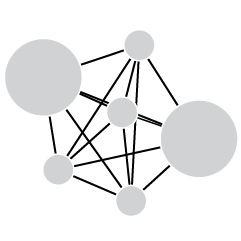
    During the Super Bowl, Ring ran a commercial that shows how everyone’s doorbell camera can be joined in a single system to find a lost dog. For 404 Media, Jason Koebler points out the privacy implications for when that system is used to find people.
    Read More

  • Members Only

    Visual echoes

    February 12, 2026

    Topic

    The Process  /  compositing, traces

    This week is about tracing back for context and comparing.

  • Searchable database of unregulated political contributions

    February 12, 2026

    Topic

    Statistical Visualization  /  contributions, elections, politics, ProPublica

    ProPublica updated their explorer for money flowing into 527s.

    Every year, hundreds of millions of dollars flow through political organizations known as 527s. These organizations are not regulated by the Federal Election Commission and are not subject to FEC-style restrictions on who can contribute or how much they can give, though donations are not tax deductible. These groups are spending more and more, topping $1 billion in 2022. Use our database to explore who funds these organizations and how they’re spending the money.

  • Composite ski race to show 0.04-second win

    February 11, 2026

    Topic

    Infographics  /  Breezy Johnson, compositing, New York Times, Olympics, skiing

    In the women’s downhill, Breezy Johnson won gold with a time of 1 minute and 36 seconds, plus 10 hundredths of a second. Emma Aicher of Germany won silver with a time of 1 minute and 36 seconds, plus 14 hundredths of a second. The New York Times used compositing to show how close the race was, as if Johnson and Aicher were skiing at the same time.

    That is nuts. You do the best with what you have and the rest is decided by randomness on the mountain.

  • 10k fewer STEM PhDs employed by the federal government

    February 11, 2026

    Topic

    Statistical Visualization  /  government, layoffs, PhD, Science Journal

    Science analyzed employment data from the Office of Personnel Management to calculate the loss of STEM PhD employees in the federal government. Over the past year, the cohort shrank by 10,109, which was 14% of government PhDs. Most who left either quit or retired.

  • Network map of Bluesky users

    February 11, 2026

    Topic

    Network Visualization  /  Bluesky, Theo Sanderson

    Theo Sanderson visualized the network of 3.4 million Bluesky users, placed by follow patterns. It is searchable and interactive. If you zoom in close enough, you can find our tiny pocket of data visualization folks, cluster adjacent to the R community, cartographers, and Brazilian software developers.

    Sanderson described some of the process on Bluesky.

  • Mechanics of the Quad God’s quadruple axel

    February 10, 2026

    Topic

    Infographics  /  ice skating, Ilia Malinin, New York Times, Olympics

    Olympic figure skater Ilia Malinin earned the nickname “Quad God” for all his completed quadruple jumps in competition. The New York Times recorded his most difficult quadruple axel with a high-speed camera, breaking down the challenge of spinning four times in the air.

    In the past, when a jump had been conquered, it often did not take long for other skaters to master it too. Not so for the quad axel. Aside from Malinin’s successes, it has only been tried in competition by two other skaters. Artur Dmitriev Jr. was the first to attempt the jump in competition, in 2018, but he fell. Japan’s Yuzuru Hanyu attempted the jump at the 2022 Beijing Olympics before retiring, but he did not land it either. It has been more than three years since Malinin’s first quad axel, and no one appears poised to match him.

  • Less focused work with AI

    February 10, 2026

    Topic

    Artificial Intelligence  /  focus, Harvard Business Review, work

    Aruna Ranganathan and Xingqi Maggie Ye are studying how work loads are shifting as companies try to integrate AI into the flow. So far it seems that AI is mostly creating a different kind of work and more of it. On Harvard Business Review:

    AI introduced a new rhythm in which workers managed several active threads at once: manually writing code while AI generated an alternative version, running multiple agents in parallel, or reviving long-deferred tasks because AI could “handle them” in the background. They did this, in part, because they felt they had a “partner” that could help them move through their workload.

    While this sense of having a “partner” enabled a feeling of momentum, the reality was a continual switching of attention, frequent checking of AI outputs, and a growing number of open tasks. This created cognitive load and a sense of always juggling, even as the work felt productive.

    Over time, this rhythm raised expectations for speed—not necessarily through explicit demands, but through what became visible and normalized in everyday work. Many workers noted that they were doing more at once—and feeling more pressure—than before they used AI, even though the time savings from automation had ostensibly been meant to reduce such pressure.

    I don’t think I like this direction. I was really hoping we’d go the other way where all current work is done with AI tools but companies still pay employees the same amount.

  • Access to Winter Olympic sports near you

    February 9, 2026

    Topic

    Maps  /  Olympics, Washington Post

    While it’s easy to go out for a run in most places, finding the nearest mountain (that still has snow on it) or speed skating track is less straightforward. So Emily Giambalvo, Dylan Moriarty, and Kati Perry, for the Washington Post, show the winter sports facilities near you. There is a map and a list of the sports within an hour drive.

    Now you too can train to be an Olympic ice skater. Distance was the only thing holding me back. No longer.

  • US population might decline for the first time

    February 9, 2026

    Topic

    Statistics  /  Bloomberg, migration, population

    For Bloomberg, Shawn Donnan runs the numbers and discusses how this might affect economic growth.

    In the year prior to July 1, 2025, the US Census revealed this week that the population grew by only 0.5%, or 1.8 million people, its lowest growth since the pandemic. The main cause for the significant slowdown was a collapse in net migration to 1.3 million from a peak of 2.7 million in the year prior to July 2024.

    In that most recent period, there were 519,000 more births than deaths, according to the new Census figures. That surplus is shrinking, however. By 2030 it’s likely to disappear altogether, making the US entirely dependent on immigration for population growth, according to the nonpartisan Congressional Budget Office.

    If net migration (arrivals minus departures) is negative, and large enough to outweigh that births-minus-deaths figure, then the US population shrinks. And there’s little question that net migration is getting smaller thanks to Trump’s policies. Census experts this week said they expect it to fall to only 316,000 in the year prior to July 2026, with the US “trending toward negative net migration.”

    No one wants to (or is able to) come to the United States. Births and deaths approach even. Population flatlines or declines. I feel like there’s some movie that starts out like this and doesn’t end well.

  • Why the best skiers don’t always win in the Olympics

    February 6, 2026

    Topic

    Infographics  /  New York Times, Olympics, skiing, uncertainty

    Olympic gold medalist Ted Ligety is on the New York Times to explain why: there are many variables that athletes cannot control while skiing really fast down a mountain in the winter.

    One of my favorite parts about the Olympics is the information graphics. There haven’t been as many over the years, so it’s good to see this short-form piece with a mix of video and illustrations.

  • Map of data center infrastructure

    February 6, 2026

    Topic

    Maps  /  data center, National Renewable Energy Laboratory

    More processing power requires more data centers, and for better or worse, they are going up across the country. Using data from a variety of sources, the National Renewable Energy Laboratory mapped data center infrastructure.

    The yellow circles represent operating data centers, orange is construction, and white is proposed. The data centers are connected through transmission and fiber optic lines.

    Keep this for when the bots take over and we need to cut the cords in the right places.

  • Disinformation swarms

    February 6, 2026

    Topic

    Artificial Intelligence  /  disinformation, ethics, fake, Wired

    Researchers published a paper in Science on the growing threat of AI swarms used for chaos in existing and new online communities. For Wired, David Gilbert reports:

    “We are moving into a new phase of informational warfare on social media platforms where technological advancements have made the classic bot approach outdated,” says Jonas Kunst, a professor of communication at BI Norwegian Business School and one of the coauthors of the report.

    For experts who have spent years tracking and combating disinformation campaigns, the paper presents a terrifying future.

    “What if AI wasn’t just hallucinating information, but thousands of AI chatbots were working together to give the guise of grassroots support where there was none? That’s the future this paper imagines—Russian troll farms on steroids,” says Nina Jankowicz, the former Biden administration disinformation czar who is now CEO of the American Sunlight Project.

    It’s difficult to imagine social media sticking around when there’s no longer a way to know what’s real. What would even be the point? Pen and paper are going to make a comeback.

  • ASCII art, visually explained

    February 5, 2026

    Topic

    Infographics  /  Alex Harri, Ascii, explainer

    ASCII art is text-based art that uses printable characters instead of pixels. Alex Harri made an image-to-ASCII renderer for himself and explains the process of converting images to text.

    I started building my ASCII renderer to prove to myself that it’s possible to utilize shape in ASCII rendering. In this post, I’ll cover the techniques and ideas I used to capture shape and build this ASCII renderer in detail.

    We’ll start with the basics of image-to-ASCII conversion and see where the common issue of blurry edges comes from. After that, I’ll show you the approach I used to fix that and achieve sharp, high-quality ASCII rendering. At the end, we’ll improve on that by implementing the contrast enhancement effect I showed above.

    The interactive elements in the explainer make the concepts much easier to understand. Otherwise, you’d just be looking at a bunch of matrices.

    And I now have a greater appreciation for the ASCII art from my BBS-ing days. I’d dial in to someone’s computer using my 2400 bps modem and a text graphic greeted you character-by-character. The good old days.

  • Members Only

    Conversational data graphics

    February 5, 2026

    Topic

    The Process  /  communication, conversation

    This week we highlight visual metaphors and use charts to have an informal chat.

  • Tariff revenue is nowhere close to enough

    February 4, 2026

    Topic

    Infographics  /  Cato Institute, revenue, tariff, Washington Post

    The administration continues to add expenses for the country and insist tariff revenues will cover the cost. The Cato Institute has been keeping track, and the Washington Post has a unit chart that shows how the claims sum to impossible.

    Each square represents one billion dollars of estimated tariff revenue. Squares are filled with each expense and total cost quickly escapes the bounds of available funds.

  • Impact of tariffs on cost of goods

    February 4, 2026

    Topic

    Statistical Visualization  /  cost, New York Times, tariff

    One year into these tariffs, Ana Swanson for the New York Times has the charts. On prices:

    Unsurprisingly, tariffs pushed up the prices of imported goods last year. Economic tracking shows that prices began climbing particularly after Mr. Trump announced sweeping global tariffs in April, reversing a trend of falling prices in previous months.

    The price effects from tariffs have, however, been somewhat smaller than many originally anticipated, partly because companies have been hesitant to raise prices for fear of losing customers.

    That’s… good? I wonder how long businesses and investors will be able to tolerate decreased margins.

  • Jobs reports delayed, because government shutdown

    February 3, 2026

    Topic

    Data Sharing  /  delay, government, New York Times, shutdown

    Ben Casselman reporting for the New York Times:

    The Bureau of Labor Statistics will not release monthly jobs numbers on Friday as scheduled because of the partial government shutdown, said Emily Liddel, an associate commissioner for the bureau. The report, one of the most closely watched economic indicators each month, would have provided data on job growth, unemployment and wages in January, as well as annual revisions to employment estimates from 2024 and 2025.

    The report “will be rescheduled upon the resumption of government funding,” Ms. Liddel said. A report on job openings and turnover in December, scheduled for release on Tuesday, will also be delayed.

    Pfft. We just run on vibes now anyways.

  • Page 10 of 420
  • <
  • 1
  • ...
  • 7
  • 8
  • 9
  • 10
  • 11
  • 12
  • ...
  • 420
  • >

Get access to courses, tutorials, and more resources.

Become a member →

Recently for Members

June 25, 2026
Visualization tools, resources, and datasets — June 2026 roundup

June 18, 2026
Great expectations

June 11, 2026
Showing when the data flips

June 4, 2026
Visualization is not the goal

May 28, 2026
Visualization tools, resources, and data, May 2026 roundup

Second Edition

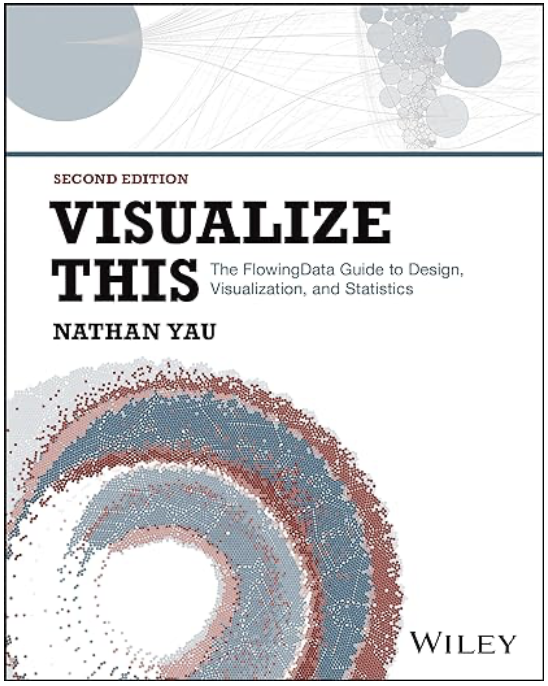
Visualize This: The FlowingData Guide to Design, Visualization, and Statistics (2nd Edition)
New tools, refined process.

Order: Amazon / Bookshop

Browse by Chart Type See All →

Donut Chart Bar Chart Moving Bubbles Step Chart Word Cloud Venn Diagram Bar Chart Race Calendar Heatmap Surface Plot

Browse By Topic

  • Visualization

    Seeing data

  • Maps

    Seeing geographic data

  • Infographics

    Explaining data

  • Networks

    Connecting data

  • Statistics

    Analyzing data

  • Software

    Working with data

  • Sources

    Getting data

  • Design

    Making data readable

Made by FlowingData

  • The Process

  • Data Underload

  • Chart Everything

  • Guides

  • Books

  • Shop

  • About
  • Contact
  • LinkedIn
  • Bluesky
  • Instagram
  • RSS
Copyright © 2007-Present FlowingData. All rights reserved.