-
Members Only
-
After backlash over their tool that pretends to provide expert editing advice, Grammarly shut down the AI feature. Now they face a class action lawsuit. Miles Klee reports for Wired:
Julia Angwin, an award-winning investigative journalist who founded The Markup, a nonprofit news organization that covers the impact of technology on society, is the only named plaintiff in the suit, which does not call for a specific amount in damages but argues that damages across the plaintiff class are in excess of $5 million. She was among the many individuals, alongside Stephen King and Neil deGrasse Tyson, offered up via Grammarly’s “Expert Review” tool as a kind of virtual editor for users.
The federal suit, filed Wednesday afternoon in the Southern District of New York, states that Angwin, on behalf of herself and others similarly situated, “challenges Grammarly’s misappropriation of the names and identities of hundreds of journalists, authors, writers, and editors to earn profits for Grammarly and its owner, Superhuman.”
-
Upon finding out that Grammarly uses AI-generated editing, supposedly driven by real authors, Casey Newton for Platformer kicked the tires on the fakery.
And there, hovering near the top of the draft, was John Carreyrou, the investigative journalist and bestselling author who took down Theranos. I’d pay good money for advice from the real Carreyrou, whose dogged pursuit of the truth behind Elizabeth Holmes’ company in the face of overwhelming legal threats is the stuff of legend. Alas, the fake Carreyrou conjured by Grammarly offered only the most anodyne of advice.
As Newton points out, plenty (or all) LLMs are driven by data that was slurped up from any available resource. So any generated writing is based on someone else’s, but Grammarly took the extra step of putting real author and writer names against the generated output without asking.
Update Grammarly is now facing a class action lawsuit and shutdown the feature.
-
School children were killed in the poorly informed attack. The New York Times reports on the unconscionable mistake:
The Feb. 28 strike on the Shajarah Tayyebeh elementary school building was the result of a targeting mistake by the U.S. military, which was conducting strikes on an adjacent Iranian base of which the school building was formerly a part, the preliminary investigation found. Officers at U.S. Central Command created the target coordinates for the strike using outdated data provided by the Defense Intelligence Agency, people briefed on the investigation said.
-
Shri Khalpada, as a technologist and musician, thinks through his mixed feelings for AI-generated music.
A tool that jumps straight to the output short-circuits all of that. The output arrives before any discovery can happen. This treats creativity as a productivity or “content creation” problem, where getting to the output as easily as possible is the goal.
There are of course parts of the music making process that are tedious and frustrating. An experienced producer sketching out an arrangement quickly or using AI to test a melodic idea before committing to it would be helpful. These cases straddle the line between a tool that helps us make music and a tool that generates it for us. I think these use cases can be much more straightforwardly helpful.
The essay includes samples of AI-generated music against human-made music, and like writing passages, it is difficult to pick which is generated.
However, as Khalpada argues, making music is more than a factory churning out songs to fill space in elevators.
My kids take piano lessons and they often have to struggle through new songs before they get it right. Sometimes the songs are more difficult than usual, so when they finally get it, the joy and sense of accomplishment is multiplied. The thought of replacing that with a magic machine that spits out music with zero traction just seems wrong.
-
We are approaching a point (or we’re here already) where generated output is not much different from human-made things. So instead of deciphering what is fake and real, we might be asking which is better. For the New York Times, Kevin Roose and Stuart A. Thompson have a quiz that asks which writing passage reads better to you.
These are isolated, short passages that don’t require sustained coherence, so it’s hard to tell the difference in the examples. Longer passages or articles would probably favor human writers, for now. I am curious if a decade from now, in search of human life, we seek craggly imperfections as a signal for a real brain and beating heart.
-
Pokemon is in its 30th year of existence. The Straits Times visualized the origins of each character in network form:
In this tree of life, The Straits Times examines each Pokemon character’s closest proxies in the real world, uncovering the scientific concepts hidden in their designs. Beyond the original species, we delve into creatures from different dimensions and eras that were introduced in later versions of the game.
They also tell the history of the game, links to real-world science, and its worldwide popularity.
I know next to nothing about Pokemon, so this piece helped me better appreciate what the kids are talking about. It turns out there’s a bit more to it than just catching them all.
-
To everyone’s surprise, that people definitely did not see coming, fake satellite images are sprinkling over social media to disperse fiction. For Financial Times, Dan Clark and Chris Campbell report on the misinformation that has become trivial to generate.
One might argue that scammers have been able to do this with Photoshop for a long time, but now it’s so easy to fake believable images. When something is easy to do, more people do it. That’s the law of lazy.
-
By Nadieh Bremer with Emily Barone, this is a charming piece on the birds people search for through Google. It’s a six-parter on the wide variety of birds, bird taxonomy, sharing, sightings by birders as they relate to searches, popularity by state, and patterns over time.
It’s all wrapped up in a bird theme with nests, eggs, and feathers, which makes the data all the more enjoyable.
-
Reuters Graphics has a feed of maps and charts for updates on Iran. They’ve covered evacuations, activities from neighboring countries, marine and air traffic, and views from above. Three clocks show the current time in Tehran, Tel Aviv, and Washington, D.C.
-
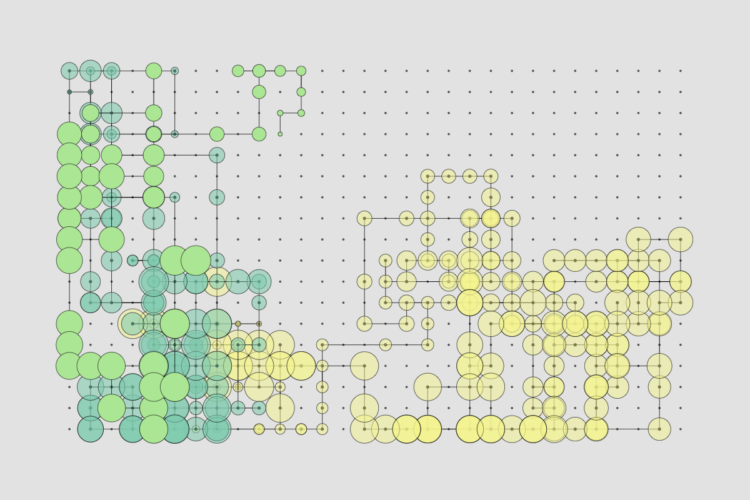
In 2017, researchers asked study participants via MTurk to list three happy moments they had in the past 24 hours. The researchers released the data as HappyDB, which provides 100,000 happy moments along with demographics. For the Pudding, Alvin Chang made an abstract map that places the moments based on less agency to more agency on the x-axis and immediate to long-term on the y-axis.
A Gemini LLM was used to classify the data into continents, countries, and states, based on type of happiness. You can zoom in to the individuals to read the moments and you can filter by location, age, sex, parental status, and marital status.
Having worked with this data a bit, I wonder if this map looks different if the ultrarich answered. Or maybe a yacht with five people on it just travels through the waterways.
-
ProPublica has been collecting thousands of disclosure documents, and they made a searchable database with the processed information.
Most political appointees and senior officials in the executive branch are required by law to file public financial disclosure reports. These are documents that detail their financial holdings, positions they hold outside government, their spouse’s holdings, their liabilities and their recent financial transactions (such as buying or selling stock) during a defined reporting period.
You can currently see the assets for the president and his 1,573 appointees, along with their roles outside government and compensation.
-
About eight million Americans reported being unemployed, based on the Current Population Survey from January 2026. Why they were unemployed varies across groups. Here are the reasons by age and highest education attained.
-
Members Only
-
The New York Times mapped the traffic difference at the Strait of Hormuz, before and after the attacks on Iran.
Every day, around 80 oil and gas tankers typically pass through the Strait of Hormuz, the narrow waterway off Iran’s southern coast that carries a fifth of the world’s oil and a significant amount of natural gas.
On Monday, just two oil and gas tankers appear to have crossed the strait, according to a New York Times analysis of shipping activity from Kpler, an industry data firm. On Tuesday, one tanker passed through.
This uses the same data as the Zeit map, except the NYT comparison with moving dots looks more like an ant farm.
-
Normally there is a steady flow of ships through the strait, but when Israel and the United States attacked Iran, many ships docked and traffic stalled on February 28. For Die Zeit, Gregor Aisch and Zacharias Zacharakis report on the stoppage with an animated map.
The data comes from Kpler Marine Traffic, which shows ship locations in real-time around the world.
-
With hundreds of thousands of Ukrainian drone flights every month, countries have had to dramatically shift their strategies. Financial Times illustrates how things are different.
Kyiv claims Moscow suffered 35,000 losses in December alone. Volodymyr Zelenskyy, Ukraine’s president, said there was now a “clear price” for every kilometre of extra land seized on the Donetsk front: 156 Russian soldiers.
The pressure of aerial surveillance has also lengthened rotations. Infantry, as well as drone, anti-tank and mortar operators, remain in position for extended periods, because relief movements are so dangerous.
There are countless stories of troops spending months dug in at forward posts.
-
In celebration of the lunar new year, many people release a lantern into the night sky on the last day of festivities. Taiwan Data Stories made a fun interactive that lets you customize and release your own lantern.
One of the festival’s most iconic traditions is the release of sky lanterns (天燈), especially in Pingxi (平溪) in New Taipei City. As evening falls, thousands of glowing lanterns drift into the night sky, each inscribed with handwritten wishes for the year ahead. In the Year of the Horse, many lanterns feature the character 「馬」, reflecting the horse’s cultural associations with vitality, speed, endurance, and forward momentum.
I hope next year they turn this into a community interactive that shows everyone’s lanterns and hopes floating around.
A decade and a half ago, there used to be a site called 43 Things where people listed their goals in life. I made a now defunct interactive that showed goals floating by as people entered new items. It was calming to watch so much hope move across the screen.
-
For Businessweek, Cecilia D’Anastasio, Olivia Solon, and Leon Yin analyzed the unusual luck of streamers while gambling on Stake. The rapper Drake and streamer Adin Ross in particular seemed to have relatively high win rates, which isn’t that weird on its own, but is a lot more weird when compared to other streamers.
There were a lot of words in this article that I did not know initially. I am now more in tune with modern times. Thank you, Businessweek.
Really, I’m just here for the data, beeswarm chart made of stars, and the spinning callout to read more. Find the authors’ methodology here.
-
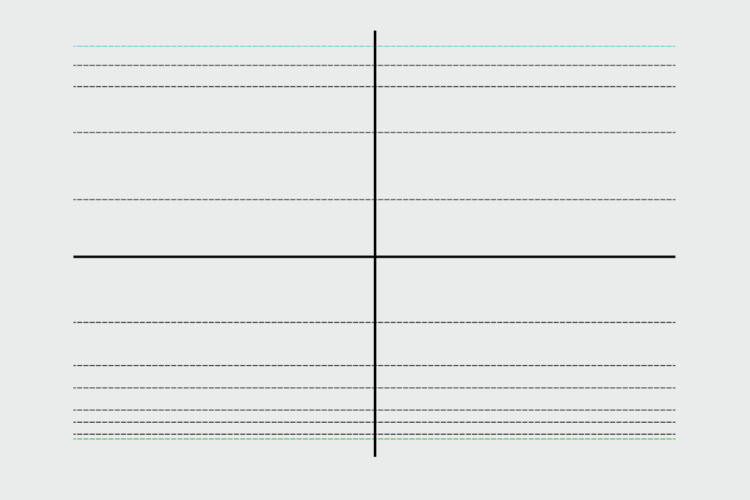
Imagine points for each piece on a chessboard. They move to x-y positions and then upwards for each move. Santiago Ortiz used this scheme to visualize famous chess matches. The above represents the second game between Garry Kasparov versus Deep Blue in 1997.
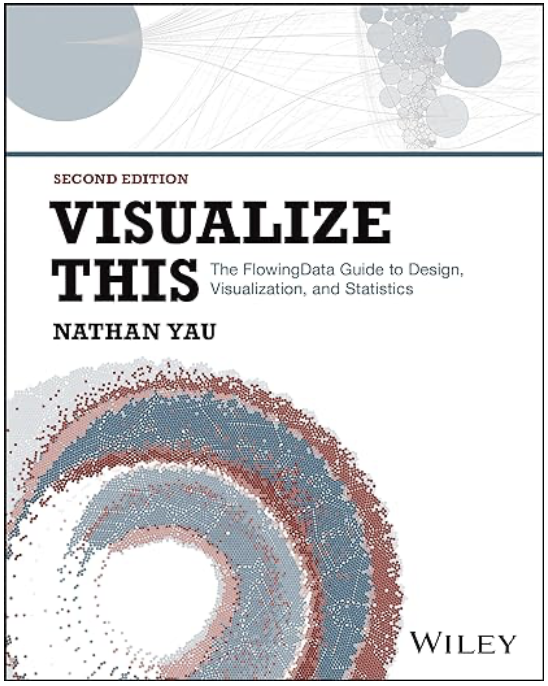
Visualize This: The FlowingData Guide to Design, Visualization, and Statistics (2nd Edition)