• Apparently, the words we use and how we structure our sentences in writing is nearly as unique as our fingerprints. Kelsey Piper has been using this to benchmark new LLMs by entering text and asking who wrote it. Anthropic’s Opus 4.7 model was the first to return all the correct answers.

    For WaPo opinion, Megan McArdle tested the search with her own unpublished text.

    Would Claude do better or worse with something more modern? I fed Claude a different opening chapter from an unpublished science fiction novel I started right before the pandemic — I contain multitudes — and this time Claude needed only 1,132 words. The eulogy I gave for my mother, lightly edited to remove some too-specific biographical details, was even faster: Depending on the passage, Claude was able to peg me as the author in as few as 124 words.

    I’m too scared to try this on myself, but I’ll assume it works. Lucky for me, I’ve always written and made things with the assumption that my mother would see it.

    However, if you publish words or share thoughts on social media, I hope you don’t value online anonymity too much.

  • For Rest of World, Rina Chandran reports on the big difference in excitement:

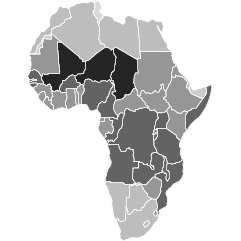
    As AI adoption increases globally, anxiety about AI is rising — but so is optimism about its benefits, according to a recent study from Stanford University’s Human-Centered Artificial Intelligence center. Not in the U.S. To the prompt, “products and services using AI make me excited,” only 38% of respondents in the U.S. said yes, in comparison to 84% in China. Southeast Asians are among the most optimistic about AI, with 80% of Indonesians, 77% of Malaysians, and 79% of Thais agreeing.

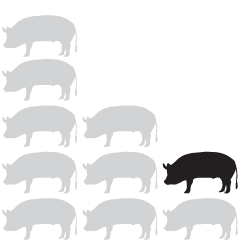
    The difference in sentiment appears to be related to each country’s trust in government regulation. From the Stanford study, here are the percentages for those who said they trust their government:

    Singapore is over 80 percent trusting. Meanwhile, the United States is the lowest at 31 percent.

    This isn’t all that surprising, but I wonder why there is such a big difference. Is there an overall distrust in government and AI companies in the United States? With the largest companies in the United States, do we get a closer look and therefore more skepticism?

  • For NYT Opinion, Paul Ford on the challenges for AI companies to build ethical systems:

    All the while, money keeps gushing in. You start out transparent, sharing your journey, but then before an initial public offering of shares, you must honor the S.E.C.-mandated quiet period and restrict promotional communications. After that, the transparency never quite returns. The market demands a rising stock price. Your company still makes a lot of software, but a huge amount of time goes to tax strategy and compliance.

    At that scale, people start to blur together, and human users can become aggregate pools of statistics and growth vectors that go up and down — a mulch into which you plant your products.

    Cue the Harvey Dent scene about living long enough to become the villain.

  • The Economist shows probabilities that a person votes for each party, given a set of demographics.

    But the electorate is not monolithic. The Economist has built a statistical model of it based on a survey of voting intentions by More In Common, a pollster. Our model estimates the probability that any individual will vote for one of Britain’s main political parties based on the eight characteristics that most influence voters’ choices: sex, age, ethnicity, region, education, employment status, type of housing and whether it is in a rural or urban area. In different combinations these characteristics yield 275,000 different voter profiles. Each week we get new polling data and update our calculations.

    Select the demographics, such as sex, age, race, and education, and see how each factor swings the probability for each party. The overall prediction shows at the bottom.

    The 2008 decision tree by Cox comes to mind.

  • The Kyoto Aquarium in Kyoto and the Sumida Aquarium in Tokyo each have detailed relationship diagrams for their penguins. The above is for Kyoto.

    The networks are framed as reality shows with weddings, divorce, and cheating, along with likes and dislikes of each penguin. Watch out for the penguin named Pon:

    Kuruma and Tako live next door to each other, and Pon has been visiting each of them in turn for snuggle sessions. Both boys are obsessed with Pon, but it seems neither of them can fully satisfy her. What’s the fate of this neighborhood love triangle!?

    Oh my.

    I don’t know why these exist, but it’s nice that they do. The aquariums have updated the networks each year since 2024.

    [Thanks, Charlotte]

  • Even if only military areas are targeted, civilian and commercial structures are also damaged, because the real world isn’t separated into discrete, selectable items on a map. Bloomberg analyzed satellite imagery to estimate the type of areas damaged in the strikes.

    Each detection was classified into one of six categories: military, industrial, civilian, commercial, government, or unclassified. We separated government facilities from the broader civilian category because these buildings may serve dual military-civilian purposes. Rather than forcing a single label, the analysis preserves the full mix of land use types around each detection — a site classified as “military” might also be 20% residential and 10% commercial, reflecting the mixed-use reality of urban areas.

    Sets of Voronoi diagrams are used to show the percentage breakdowns for each detection.

  • Lower fertility is typically pitched as a bad thing, but it can be good in some ways, such as more women going to college and building careers or fewer unplanned teen pregnancies. For NYT’s the Upshot, Claire Cain Miller reports on the other side of lower birth rates.

    One of the biggest drivers of the delay in childbearing is widely considered to be a success story: the decline of teen pregnancy, which had been unusually high in the United States. It reached its recent peak in 1991, at 61.8 births per 1,000 girls and women ages 15 to 19, before rapidly declining to 11.7 per 1,000 in 2025. The change is attributed to more effective contraception, education about pregnancy prevention and less sex among teenagers.

  • Members Only

    This week we highlight an overlay that obscures the useful bits and helps no one.

  • Shri Khalpada of PerThirtySix explains how GPS works using a set of small interactive globes.

    The answer is in some ways simpler than you’d expect, and in other ways more complex. GPS is fundamentally a translation tool: it converts time into distance. A satellite sends a signal, your phone catches it, and the delay between those two events tells the phone exactly how far away the satellite is. Everything else is about making that measurement precise enough to be useful: accounting for bad clocks, satellite geometry, and eventually, Einstein’s theories.

    So geometry is useful. Imagine that.

  • OpenAI announced their generative model ChatGPT Images 2.0. One of the new features is that you can generate more than a single image in a prompt, which means you don’t have to generate images one-by-one and stitch them together on your own.

    So now everyone can generate research posters like the one above with a quick prompt. Blessed day. Although, the robots are going to eventually do all the work for us anyways, so I’m not sure what the point is.

  • Mortality varies widely by geography and demographic group. It has also changed over time with improvements in medicine or availability of resources. Our World in Data shows the differences with a treemap. Use the dropdown menus to select groups and a slider to shift time.

    For low-income countries:

    [N]on-communicable diseases account for 43% of deaths; that’s a much smaller share than in the world as a whole (75%). That’s not because death rates of these diseases are lower in poorer countries; adjusting for age, they’re actually higher than they are in rich countries.

    The difference is that death rates from infections, injuries, and child and maternal mortality are far higher. One in three die from infectious diseases such as HIV/AIDS, malaria, meningitis, and tuberculosis.

    Maybe the hardest number in this dataset to sit with is that one in ten deaths is a newborn or a mother leaving children behind.

  • The administration wants to build a 250-foot tall arch in Washington. That’s a pretty big arch. To show how big that is, Marco Hernandez and Anushka Patil, for the New York Times, used illustrations of the proposal against existing arches and structures.

  • Using inference with what you ask, how you write, and your phrasing, a complete profile is built from just a few sentences. For the Straits Times, Amanda Shendruk and Youjin Shen use a concrete example to demonstrate.

    I like the build-up in this piece. It starts with a chat, and then highlights line-by-line and word-by-word to build a complete user profile that most people never think about.

    Back in my day, companies used to collect data about you in more obvious ways, such as suggesting you fill out profiles or tracking clicks across various sites. They’d convince college kids to share links on their AIM away message. Later, people would be convinced that voice assistants like Alexa and Siri were eavesdropping to serve hyper-targeted ads.

    Well no more. These days, a chatbot will do.

  • The Strait of Hormuz might be “completely open” for ships to pass through, depending on the source and the timing. Hard to say from anecdotes. But at least we can see what’s been going on through data. For the New York Times, Josh Holder, Adina Renner, and Blacki Migliozzi mapped routes before the war started and after and charted events over the past month.

  • Japanese officials and researchers have been carefully documenting when cherry blossoms bloom in Kyoto for the past 1,200 years. Yasuyuki Aono was the current record keeper, but he passed away recently with no one to take his place. For the Guardian, Chris Baraniuk reports on the search for a new keeper:

    “You can very much see that he planned to continue,” said Tuna Acisu, a data scientist at Our World in Data, an online platform that publishes a chart based on Aono’s cherry tree data. “That made me a little bit emotional.”

    Now, following a search launched by Acisu last week – sparked by fears that no one would be able to continue the 1,200-year cherry blossom record – a researcher in Japan has stepped forward and offered to make formal observations of the mountain cherry’s spring flowerings.

    “He is consulting the same sources as Prof Aono to get us this year’s cherry blossom peak bloom and said he will confirm the date in the coming days,” Acisu said. The researcher in question asked to remain anonymous until the arrangement is finalised.

    The data has become a marker for climate change, as the blooms come earlier and earlier. It’s good to see the centuries-old dataset continue.

  • Millions of people protested in Hong Kong against China’s Communist Party back in 2019. China imposed a national security law soon after. Reuters highlights the arrests of several hundred people and how their lives are several years later.

    Chan Kim Kam, 38, was one of the first people arrested in Hong Kong under the revamped sedition law, part of a second package of national security laws enacted in 2024 known as Article 23 . She and several others were accused of publishing posts with “seditious intent” related to the 1989 Tiananmen crackdown.

    Although she hasn’t been charged, Chan, in an interview with Reuters, said she has lost several jobs due to the fallout of her arrest and now has to report to a police station weekly. “Is it really necessary to kill off a person’s survival space in Hong Kong?” she asked rhetorically. “It’s a kind of suppression targeting people with certain political backgrounds.”

    A set of illustrated Post-it notes shows each person arrested, and the theme is constant throughout the article. Colors indicate the type of law invoked to warrant an arrest.

    The transitions between anecdote and chart type is very good here and links reality to the statistically abstract.

  • Some occupations have more turnover than others. See how it varies for your occupation and others.

  • To make India’s census documents more accessible to the public in the 1970s, the government worked on the Portrait of Population for the 1971 Census. Aman Bhargava and Vivek Matthew, for Diagram Chasing, explain the history of the publication and provide an archive of 700 hand-drawn charts from the publication.

    Half a century later, what makes these documents worth looking at is the tremendous and earnest effort being made to render this data interesting and engaging. This was before data visualization became cheaper to produce digitally, which means every chart, every pictogram, and every illustrated comparison was an expensive decision in terms of time and effort, especially within the already stretched departments of the government. One can imagine the writers, artists, and designers (because that is what they were, even if the bureaucracy had not used those words) who produced these documents thinking about what would land with a reader holding this pamphlet.

    Bring back efforts like this for all countries.

  • Members Only

    This week we put more information in the background to improve the signal in the foreground.

  • For most of history, maps of the Moon were based only on the near side, because that’s all we could see from Earth. Danny Robb of Inverting Vision gives a visual history lesson on how we eventually saw the rest.

    We wouldn’t be able to get a better look at the far side of the Moon until we invented a way to send cameras there. At the dawn of the Space Age, rockets gave us the ability to do just that. In 1959, Soviet engineers created a series of robotic probes, and launched them toward the Moon. One of these managed a lunar flyby, and was named Luna 3. Engineers equipped Luna 3 with a film camera, capable of developing the exposed film, scanning the images, and transmitting them back to Earth by radio.