Infographics

  • The Growing Plague that is Spam

    March 24, 2010 to Infographics by Nathan Yau

    Spam sucks. We all hate it, but no matter how good the filter, something always seems to get through. Want some cheap Vi4gr4? I can tell you where to get it. New Scientist takes a look at the spamdemic. It costs very little to send tens of thousands of emails, but it only takes a tiny percentage of idiots to make it all worth it for spammers.

    Seriously - who falls for these things?

    • oRo1exWatches $200 Off - Each Free Shipping Watch, 2 Days Left, Snap UP! rkru kp
    • USA: ~Percocent~Ritalin best sale !!
    • ~~~Good day :~~~Vicodi~ _ P~ercocet~~~
    • 100 percent male power
    • Heartfelt Plea from Supreme Master Ching Hai: Be Organic Vegan and Loving Kindness for Saving Lives

    I have to admit my spam folder does supply brief moments of amusement every now and then, but come on.

    [via Data Mining]

  • March Madness by the numbers

    March 23, 2010 to Infographics by Nathan Yau

    March Madness final620

    I didn't fill out my bracket this year, so it's not nearly as exciting for me. I don't think that's stopped thousands of bars across the country from cleaning house though.

    [FastCompany via Good]

  • Notes from Interactive Infographics #interinfo #sxsw

    March 17, 2010 to Infographics, News by Nathan Yau

    Yesterday was the Interactive Infographics panel at South by Southwest, and if Twitter is any indication of how it went, I'd say the panel had a captivated audience. I wouldn't expect anything less from the four panelists, Ben Fry (Processing), Shan Carter (NYT), Casey Caplowe (Good), and Eric Rodenbeck (Stamen)

    Unfortunately, I didn't get to attend, but luckily I was able to follow the play-by-play on Livefyre (sort of a cross between chat and forum) along with some excellent notes from @jpmarcum and @bryanconnor. Here are the important bits I was able to glean.

    The bulk of the time was spent showcasing the work from the four groups. I think you can find most of the projects through FlowingData. Just use the search form on the bottom right of this page. The good stuff came towards the end during the Q&A.
    Continue Reading

  • Use your skills to help others

    March 17, 2010 to Infographics by Nathan Yau

    Screen shot 2011-02-16 at 11.54.00 PM

    Designer Christopher Harrell talks about, with a dose of various embedded graphics, pointing your skills toward something good. Harrell's video was one of the winners in the What Matters to You scholarship competition for Vancouver Film School. It looks like home video, but that just adds to the charm.
    Continue Reading

  • The State of the Internet

    March 1, 2010 to Infographics by Nathan Yau

    From JESS3 is this video on the state of the internet. It's essentially a barrage of numbers, but it's fun nevertheless and it's got some interesting morsels in there.

  • Olympic musical – how fractions of second make all the difference

    February 28, 2010 to Infographics by Nathan Yau

    audio

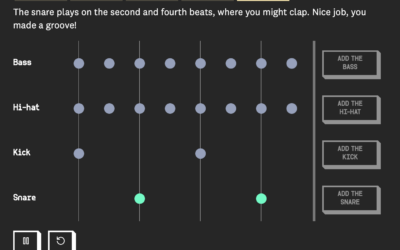
    Like everyone, I've been watching the Olympics, and it continues to amaze me how hundredths of a second can make up the difference between a gold medal and nothing at all. Amanda Cox of The New York Times visualizes and audiolizes(?) these tiny differences. She got creative with this one.

    Each row is an event and going from left to right, the first dot is the gold medal winner. The amount of space between the first dot and the dots that follow is how many seconds athletes finished after the winner.

    Visually, this only sort of works, but click on play to hear how these differences sound, and it puts everything in perspective.

    See the rest of NYT interactive Olympic coverage here. You know, just in case NBC coverage doesn't cut it for you.

  • Evolution of Olympic Pictograms

    February 26, 2010 to Infographics by Nathan Yau

    pictograms

    Every Olympics since 1936 has had a series of pictograms (i.e. icons that look like restroom signs) that represents the events. Here are pictograms for the Vancouver games, and here they are for the Beijing Olympics. Some series are distinct while others clearly sucked it up. Designer Steven Heller discusses the evolution of these Olympic pictograms in this video for The New York Times. Which set do you like best?
    Continue Reading

  • How a Giant Shark Took Down an Airplane

    February 19, 2010 to Infographics by Nathan Yau

    megashark-full

    This graphic from designer Stephen Taubman is entertaining in so many ways. It is based on the amazing story of Mega Shark vs. Giant Octopus, one of the greatest movies ever made. I've never seen it, but after you watch the clip below, you'll be running to find a copy.
    Continue Reading

  • Review: The Wall Street Journal Guide to Information Graphics

    February 18, 2010 to Infographics, Reviews by Nathan Yau

    Add another book to the growing library of guides on how to make information graphics the right way. Dona M. Wong, former graphics director of The Wall Street Journal and now strategy director for information Design at Siegel+Gale, provides the dos and don'ts of data presentation in The Wall Street Journal Guide to Information Graphics.

    First Impressions

    Given Wong's background, you can make a pretty good guess about the examples used. They're not graphics from The Journal but they do look a lot like them. The book description also makes a point of highlighting that Wong was a student of Edward Tufte, which was a big hint on what the book is like.
    Continue Reading

  • Watching the Pulse of the Olympics on Twitter

    February 15, 2010 to Infographics by Nathan Yau

    stamen

    The Olympics are in full swing, so of course Twitter is abuzz with every big event. Want to keep track of the trends in real-time? Watch the Olympic pulse, by Stamen Design, on the NBC site.
    Continue Reading

  • Future of Employment in the Decade Ahead

    February 3, 2010 to Infographics by Nathan Yau

    NPR shows projected employment changes from 2008 to 2018. Large circles represent major employment sectors and are sized by current employment numbers. Smaller circles are areas in the respective category.

    Oddities

    Maybe my eyes are playing tricks on me, but the sizes of the large sectors look funky. For example, is the bubble for Education, health, and social services really ten times the size of the bubble for Information? I don't think so (and it should be).

    It'd probably aslo be worth distinguishing between negative and positive growth. You know something simple like making the 0% line solid or color-coding the declining sectors.

    What do you think?

    [via The Big Picture | Thanks, Barry]

  • Beatles Music in Infographics

    January 28, 2010 to Infographics by Nathan Yau

    I'm sure a lot of you love The Beatles. I'm not a huge fan myself, but for those who are, you will love these graphics from designer Michael Deal.

    The graphic up top shows the level of collaboration between group members. The level of shared authorship was a lot higher early on and then pretty much died off before the breakup.
    Continue Reading

  • The 2009 Feltron Annual Report – OCD Made Sexy

    January 26, 2010 to Infographics by Nathan Yau

    feltron-cover

    Nicholas Felton's personal annual report on his life is now up. For those not in the know, Felton makes this report every year based on data he has collected about himself. People see the report, and think to themselves, "I want that for my life."
    Continue Reading

  • Engineer’s Guide to Drinks

    January 22, 2010 to Infographics by Nathan Yau

    Seeing as the weekend is just about here, I'm sure many of you can find a use for this guide. It's drink recipes hand-drawn like schematics to some circuitry system. I like how color wasn't an option, so instead they used 42 stripe and dot patterns to differentiate ingredients.

    See the full version here [pdf].

    My sister sent this one along, but I couldn't find the original source. Anyone know?

  • Crayola Crayon Colors Multiply Like Rabbits

    January 19, 2010 to Infographics by Nathan Yau

    In 1903, Crayola had eight colors in its standard package. Today, there are 120, along with special packs like Gem Tones and Silver Swhirls. What happened? Above, from Weather Sealed, shows the growing color selection (and a few color retirements) in the standard package from 1903 to now.

    In 2101, Crayola will hit a color peak and revert to a simpler time. The standard pack will have just two colors: black and Tickle Me Pink (#FC89AC).

    [via Waxy Links]

  • Need to Escape Jupiter’s Gravitational Pull? Good Luck

    January 8, 2010 to Infographics by Nathan Yau

    gravity_wells_large

    Randall of xkcd has been having fun with data visualization lately. In his latest data-ish comic, Randall explores gravity wells. The height of each well is sized relative to the amount of energy (on Earth) it would take to escape that planet's gravity. The width of wells are scaled by planet size.

    So you'd need one big arse rocket to escape Jupiter.

    I know it's a comic, hand-drawn, and all stick-figurey and stuff, but Randall actually explains the concepts really well. There's good annotation, clear examples, and he's made an obscure topic easy to understand.

    It's also entertaining in the Bill Nye the Science Guy (i.e. best Saturday morning show ever) sort of way.

    [Thanks, Ricki and Thomas]

  • Even Older Infographics from the 19th Century

    January 6, 2010 to Infographics by Nathan Yau

    Old graphics are awesome. We saw some from the 1930s already. These are even older.

    Other than the maps, I don't exactly know what I'm looking at (knowing French would help too), but who cares? Mmm, hand-drawn goodness.
    Continue Reading

  • A Visual History of Loudness in Popular Music

    January 5, 2010 to Infographics by Nathan Yau

    All Things Considered discusses why music sounds worse than it did a few decades ago. Through a practice using compressors, the quiet parts of a song are made louder and the louder parts quieter so that the song as a whole sounds louder to your ear. The purpose: to make the song stand out when you hear it on the radio.

    As a result, tracks have gotten louder over the years.
    Continue Reading

  • Charting the Decade

    December 30, 2009 to Infographics by Nathan Yau

    Did we all see this? Phillip Niemeyer of Double Triple pictures the past ten years in this Op-Chart for The New York Times. Each row is a theme, and each column represents a year. For example, the champion rep for 2007 is Tiger Woods or collagen as the fad of 2002. Oh how times change.

    Have a happy new year everyone. Be safe.

    [via WeLoveDataVis]

  • Elastic Lists Celebrates Five Years of Information Aesthetics

    December 23, 2009 to Infographics by Nathan Yau

    In celebration of Information Aesthetics' birthday, Moritz Stefaner of Well-formed Data adapted his elastic lists concept to all five years of infosthetics posts. Each white-bordered rectangle represents a post, and colors within rectangles indicate post categories.

    Select categories on the right, and the list updates to show related categories. Similarly, filter posts by year, author, and/or number of categories. Select a rectangle to draw up the actual post.

    Go on, give it a try for yourself. Excellent work.

    And then head over to infosthetics and wish it a happy birthday.

Unless otherwise noted, graphics and words by me are licensed under Creative Commons BY-NC. Contact original authors for everything else.