Category: Artistic Visualization

  • Review: We Feel Fine (the book) by Kamvar and Harris

    Posted Mar 11, 2010 to Artistic Visualization, Reviews / 4 comments

    Review: We Feel Fine (the book) by Kamvar and Harris

    The opening page of We Feel Fine: An Almanac of Human Emotion reads a quote from "a woman in Maine." It sets the stage for the rest of the book.

    I have a problem I'm sure many other bloggers face: I am perfectly comfortable sharing intimate details about my emotions with complete strangers I meet online but shy away from expressing my true feelings to anyone I know in real life.

    For those unfamiliar, We Feel Fine is a project from Jonathan Harris and Sep Kamvar that's been online since 2006. At its core, the goal is to show the emotions of the authors behind millions of blog posts on the Web by looking for sentences that start with "I feel" or "I am feeling." It's an interactive artwork "authored by everyone."
    Continue Reading

  • Math Functions in the Real World

    Posted Feb 12, 2010 to Artistic Visualization / 14 comments

    Math Functions in the Real World

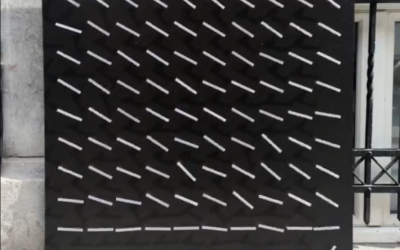
    RIT student Nikki Graziano photographs math functions in the real world. Some are a stretch but others are dead on.
    Continue Reading

  • Save pens. Use Garamond font

    Posted Jan 29, 2010 to Artistic Visualization / 64 comments

    Save pens. Use Garamond font

    Designers Matt Robinson and Tom Wrigglesworth looked at ink usage of some commonly-used typefaces, by hand-drawing them with ballpoint pens.
    Continue Reading

  • Data Visualization Christmas Ornaments

    Posted Jan 15, 2010 to Artistic Visualization / 1 comment

    Data Visualization Christmas Ornaments

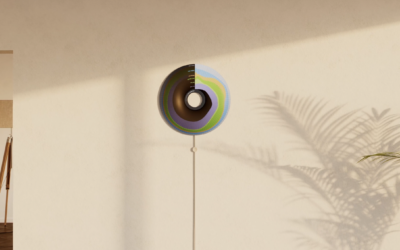
    It's funny how data is finding it's way into everyday objects. There was jewelry a few months ago and coins last month. Now we've got this experiment with Christmas ornaments from Really Interesting Group (RIG). The snowman's head is sized by the number of followers on Twitter; the (rain) bars represent miles traveled per month on Dopplr; the red shows listening habits on last.fm; and finally, the blue one shows apertures you've used over the year for photos uploaded to Flickr. Continue Reading

  • The Decline of Maritime Empires

    Posted Dec 24, 2009 to Artistic Visualization / 6 comments

    The Decline of Maritime Empires

    This experiment (below) by graduate student Pedro Miguel Cruz shows the decline of Maritime empires during the 19th and 20th centuries .

    Pedro explains:

    I don’t wanna call this small experiment of information visualization neither information art. Either way sounds too pretentious - as the visuals are not very sophisticated or elegant, and the way that the information is treated doesn’t enable the extraction of advanced knowledge. Although, it works very well as a ludic narrative. I ultimately found it very joyful.

    So sit back and enjoy. It's fun to watch.

    Let's for a second consider an alternative to view this data more analytically for some more insight and what not. I'm thinking an area graph ala Fernanda Viegas and Martin Wattenberg's History Flow for Wikipedia dynamics could be interesting. What do you think?

  • When Twitter Says Good Morning Around the World

    Posted Oct 19, 2009 to Artistic Visualization / 15 comments

    When Twitter Says Good Morning Around the World

    Jer Thorp, an artist and educator from Vancouver, Canada, visualizes when people "wake up" on Twitter, or when they say good morning, rather. Here it is in its 3-d globe glory. It's called GoodMorning!. Notice the wave.

    Okay, wait, I know you're already furiously leaving or thinking about a comment on how absolutely useless and non-concrete this is - and Jer is the first to admit that - but there is obviously something to learn here.

    However, it's late, and I'm tired, so I'll leave that up to you. But off the top of my head, I'm thinking a more relevant subject like disease or need of help and color coding that's more meaningful. Your turn.

    [via datavisualization.ch]

  • The S&P 500 as a Planetary System

    Posted Oct 13, 2009 to Artistic Visualization / 5 comments

    The S&P 500 as a Planetary System

    The Stock Ticker Orbital Comparison, or STOC for short, from media student James Grant, uses a planetary system metaphor to display activity with the S&P 500. Each circle represents a stock and they orbit a planet-like (or sun?) thing in the middle.
    Continue Reading

  • Data Interface Iterations: Designing webtrendmap.com’s Stacks

    Data Interface Iterations: Designing webtrendmap.com’s Stacks

    This is a guest post by Craig Mod, who collaborated with Information Architects, to develop Web Trend Map. The site, which is largely inspired by iA's previous work, lets you curate links with sources you trust. This post describes the multiple iterations and decisions made during the design process.

    Design and development of webtrendmap.com v1.0 took three months. During this period the interaction design and interface underwent countless subtle permutations. What we ended up with is almost totally unlike what we started with. There was a lot of painful iteration. A lot of gut wrenching backtracking.

    Let's drill down and take a look at how we iterated on one key webtrendmap.com visual element: the Stack. Continue Reading

  • 2009 MTV VMA Twitter Tracker Live

    Posted Sep 13, 2009 to Artistic Visualization / 7 comments

    2009 MTV VMA Twitter Tracker Live

    The 2009 MTV Video Music Awards are on right now (and I'm sure all of you are watching). Check out the live VMA Twitter tracker by Stamen and Radian6. It's kind of fun to watch, even if you aren't tuned into MTV. Celebrity profile pictures are dynamically sized by how much people are talking about them on Twitter. Apparently Kanye is performing right now... or he did something stupid.

  • Ben Fry Visualizes the Evolution of Darwin’s Ideas

    Posted Sep 7, 2009 to Artistic Visualization / 8 comments

    Ben Fry Visualizes the Evolution of Darwin’s Ideas

    Ben Fry, well-known for Processing and plenty of other data goodness, announced his most recent piece, On the Origin of Species: The Preservation of Favoured Traces, made possible by The Complete Work of Charles Darwin Online.

    The visualization explores the evolution of Charles Darwin's theory of, uh, evolution. It began as a less-defined 150,000-word text in the first edition and grew and developed to a 190,000-word theory in the sixth edition.

    Watch where the updates in the text occur over time. Chunks are removed, chunks are added, and words are changed. Blocks are color-coded by edition. Roll over blocks to see the text underneath.

    As usual, excellent work, Mr. Fry.

    Happy labor day!

  • How Does the Internet See You? – Personas From MIT Media

    Posted Aug 26, 2009 to Artistic Visualization / 2 comments

    How Does the Internet See You? – Personas From MIT Media

    I Google myself every now and then. Everyone does. I don't know why people act like it's all weird to do it. We're all interested in what's out there on the Internet about us or someone with the same name as us. Some of it is right. A lot of it is wrong. Personas, from MIT's Metropath(ologies) exhibit, scours the Web and attempts to characterize how the Internet sees you.

    In a world where fortunes are sought through data-mining vast information repositories, the computer is our indispensable but far from infallible assistant. Personas demonstrates the computer's uncanny insights and its inadvertent errors, such as the mischaracterizations caused by the inability to separate data from multiple owners of the same name. It is meant for the viewer to reflect on our current and future world, where digital histories are as important if not more important than oral histories, and computational methods of condensing our digital traces are opaque and socially ignorant.

    The piece is about the incorrectness of your Internet profile just as much as what's right.

    As many have pointed out, the end result is kind of anti-climatic, but it's fun to watch the process at work, which makes heavy use of natural language processing algorithm latent Dirichlet allocation [pdf] from Blei, et. al.

    How does the Internet see you?

    [via infosthetics | Thanks, Alexandria]

  • Map/Territory Shows Augmented Reality of the Future

    Posted Aug 19, 2009 to Artistic Visualization / 6 comments

    Map/Territory Shows Augmented Reality of the Future

    Map/Territory, by designer Timo Arnall, is a concept video of what it might be like to interact with a map embedded in real life - not just on a phone or on a computer screen. Imagine a world where a flick of the wrist draws up all the information you need in real time and space. Check out the 30-second clip below:

    I really love stuff like this. Stuff like Map/Territory, Bruce Branit's holographic world, Microsoft's vision for 2019, or even the Starship Enterprise is simply beautiful. It's fun to imagine what the future might be like.

    Nevermind the how part. Technically speaking, I have no idea how Map/Territory would ever come to fruition, and I'm pretty sure Timo doesn't either, but who cares? While technical know-how is absolutely useful and completely necessary, sometimes you need imagination and creativity to push the boundaries of what's possible.

    [via O'Reilly Radar]

  • Colored Tree, Cookies, and Stairs in Visualization Ad

    Posted Jul 7, 2009 to Artistic Visualization / 11 comments

    Colored Tree, Cookies, and Stairs in Visualization Ad

    These ads for Hospital Alemán from Saatchi & Saatchi color code physical items for what parents say and what children do.

    TREE_HOSPITAL_COOKIES

    TREE_HOSPITAL_TREE

    It's not quantitative at all, and a lot of you probably won't even consider this visualization. It is pretty though, and I could see how this idea might be applied to data.

    [via I Believe in Advertising | Thanks, Ken]

  • Designing Interfaces for the Star Ship Enterprise

    Posted Jun 9, 2009 to Artistic Visualization / 2 comments

    Designing Interfaces for the Star Ship Enterprise

    We've all seen the new Star Trek by now. If you haven't, you should. There are amazing visuals throughout, especially on the bridge, where those aboard can just about interact with everything that can be touched. Albeit it's purely fictional and non-functional, but it's good to dream.

    OOOii, the group behind the beautiful board in Minority Report and the immersive technologies in The Island, is responsible for bringing the interfaces in Star Trek to life. Continue Reading

  • Pixel City: Computer-generated City

    Posted May 14, 2009 to Artistic Visualization / 41 comments

    Pixel City: Computer-generated City

    Pixel City is a procedurally-generated city by Shamus Young. For the non-coders out there, this essentially means that based on a certain set of rules, this 3-D city is generated dynamically each time the program runs. Here, the video that shows the Young's process will make it more clear:

    Check out the very detailed 10-part explanation for more on how Pixel City was built. Hopefully more comes out of it than just a screensaver. If it does become a screensaver though, I'd gladly use it.