• Membership
  • Books
  • Projects
  • Learning
  • Newsletters
  • Member Login
  • Database to explore conflicts of interest through financial disclosures

    March 5, 2026

    Topic

    Data Sources  /  conflict, finance, politics, ProPublica

    ProPublica has been collecting thousands of disclosure documents, and they made a searchable database with the processed information.

    Most political appointees and senior officials in the executive branch are required by law to file public financial disclosure reports. These are documents that detail their financial holdings, positions they hold outside government, their spouse’s holdings, their liabilities and their recent financial transactions (such as buying or selling stock) during a defined reporting period.

    You can currently see the assets for the president and his 1,573 appointees, along with their roles outside government and compensation.

  • Data Underload  /  unemployment, work

    Unemployment reasons, by age and education

    About eight million Americans reported being unemployed, based on the Current Population Survey from January 2026. Why they were unemployed varies across groups. Here are the reasons by age and highest education attained.

    Read More
  • Members Only

    Animating data for fun and interest

    March 5, 2026

    Topic

    The Process  /  animation

    This week is about animating data to better show insights and to keep randos engaged on the internets.

  • Oil supply chain slowdown

    March 4, 2026

    Topic

    Maps  /  New York Times, ships, traffic, war

    The New York Times mapped the traffic difference at the Strait of Hormuz, before and after the attacks on Iran.

    Every day, around 80 oil and gas tankers typically pass through the Strait of Hormuz, the narrow waterway off Iran’s southern coast that carries a fifth of the world’s oil and a significant amount of natural gas.

    On Monday, just two oil and gas tankers appear to have crossed the strait, according to a New York Times analysis of shipping activity from Kpler, an industry data firm. On Tuesday, one tanker passed through.

    This uses the same data as the Zeit map, except the NYT comparison with moving dots looks more like an ant farm.

  • Marine traffic through the Strait of Hormus

    March 4, 2026

    Topic

    Maps  /  ships, traffic, war, Zeit

    Normally there is a steady flow of ships through the strait, but when Israel and the United States attacked Iran, many ships docked and traffic stalled on February 28. For Die Zeit, Gregor Aisch and Zacharias Zacharakis report on the stoppage with an animated map.

    The data comes from Kpler Marine Traffic, which shows ship locations in real-time around the world.

  • Drones and modern warfare in Ukraine

    March 4, 2026

    Topic

    Infographics  /  drone, Financial Times, Ukraine, war

    With hundreds of thousands of Ukrainian drone flights every month, countries have had to dramatically shift their strategies. Financial Times illustrates how things are different.

    Kyiv claims Moscow suffered 35,000 losses in December alone. Volodymyr Zelenskyy, Ukraine’s president, said there was now a “clear price” for every kilometre of extra land seized on the Donetsk front: 156 Russian soldiers.

    The pressure of aerial surveillance has also lengthened rotations. Infantry, as well as drone, anti-tank and mortar operators, remain in position for extended periods, because relief movements are so dangerous.

    There are countless stories of troops spending months dug in at forward posts.

  • Release your lantern

    March 3, 2026

    Topic

    Infographics  /  lantern, Lunar New Year, Taiwan Data Stories

    In celebration of the lunar new year, many people release a lantern into the night sky on the last day of festivities. Taiwan Data Stories made a fun interactive that lets you customize and release your own lantern.

    One of the festival’s most iconic traditions is the release of sky lanterns (天燈), especially in Pingxi (平溪) in New Taipei City. As evening falls, thousands of glowing lanterns drift into the night sky, each inscribed with handwritten wishes for the year ahead. In the Year of the Horse, many lanterns feature the character 「馬」, reflecting the horse’s cultural associations with vitality, speed, endurance, and forward momentum.

    I hope next year they turn this into a community interactive that shows everyone’s lanterns and hopes floating around.

    A decade and a half ago, there used to be a site called 43 Things where people listed their goals in life. I made a now defunct interactive that showed goals floating by as people entered new items. It was calming to watch so much hope move across the screen.

  • Unusual luck for streamers in the crypto casino Stake

    March 3, 2026

    Topic

    Infographics  /  Bloomberg, cryptocurrency, gambling, luck, Stake

    For Businessweek, Cecilia D’Anastasio, Olivia Solon, and Leon Yin analyzed the unusual luck of streamers while gambling on Stake. The rapper Drake and streamer Adin Ross in particular seemed to have relatively high win rates, which isn’t that weird on its own, but is a lot more weird when compared to other streamers.

    There were a lot of words in this article that I did not know initially. I am now more in tune with modern times. Thank you, Businessweek.

    Really, I’m just here for the data, beeswarm chart made of stars, and the spinning callout to read more. Find the authors’ methodology here.

  • Famous chess matches visualized as 3-D wireframes

    March 2, 2026

    Topic

    Data Art  /  chess, Santiago Ortiz

    Imagine points for each piece on a chessboard. They move to x-y positions and then upwards for each move. Santiago Ortiz used this scheme to visualize famous chess matches. The above represents the second game between Garry Kasparov versus Deep Blue in 1997.

  • Visual catalog of Isotype examples

    February 27, 2026

    Topic

    Infographics  /  Isotype, RJ Andrews

    Isotype, or International System of Typographic Picture Education, is a picture language used to communicate concepts and ideas. The method is often paired with or used as visualization. RJ Andrews cataloged examples from his historical collection of works, which you can browse by chart type and feature.

  • Weather forecast app, with uncertainty as a core feature

    February 26, 2026

    Topic

    Apps  /  forecast, uncertainty, weather

    The folks who made Dark Sky, my once go-to weather app that was inevitably acquired by Apple, are back with a new weather app: Acme Weather. Instead of oversimplifying a forecast only to show what is most likely, you also get other possible ways the day can go.

    Understanding this uncertainty is crucial for planning your day. Most weather apps will give you their single best guess, leaving you to wonder how sure they actually are, and what else might happen instead. Will it actually start raining at 9am, or might it end up pushed off until noon? Will there be rain or snow? How sure are you? You can’t plan your day if you don’t know how much you can trust the forecast, or know what other possibilities might arise. Rather than pretending we will always be right, Acme Weather embraces the idea that our forecast will sometimes be wrong.

    Embracing uncertainty. Just like the Nicolas Cage title character in the movie The Weather Man. It’s not just wind.

    They also have fun things in the works like rainbow alerts and beautiful sunsets. I might have to switch.

  • Members Only

    Visualization tools and resources, February 2026 roundup

    February 26, 2026

    Topic

    The Process  /  roundup

    Here is what happened in February.

  • Illustrated engineering in everyday objects

    February 26, 2026

    Topic

    Infographics  /  Bryan Macomber, engineering, illustration, mechanical

    Mechanical Pencil is a project by Bryan Macomber that illustrates the mechanical bits in everyday objects. The process:

    I take the product apart. CAD it up. Illustrate each view. Then animate and lay it out for the web. That sounds quick, but it does take me quite a bit of time to create each one.

    The leading object is, naturally, a mechanical pencil. Did you know that the plastic part that holds the lead in place is called a chuck? Other items so far include a Pez dispenser, a pen, and a lighter.

    The interactive illustrations are satisfying to open, close, click, and release. I want more.

  • Mysteries of women’s clothing sizes

    February 25, 2026

    Topic

    Infographics  /  clothes, Pudding, size, women

    The challenges continue for women who want clothes that fit properly. For the Pudding, Amanda Sakuma, with Jan Diehm, explains the variation in women’s size and shape, the inconsistencies in sizing across stores, and how the overlap between these two creates sizing chaos.

    This piece does a good job of showing and explaining distributions, which is a tough concept to grasp for non-data folks. The illustrations of women instead of just dots on the beeswarm help keep you focused on the variation.

  • Regional biases and stereotypes in ChatGPT models

    February 24, 2026

    Topic

    Artificial Intelligence  /  bias, ChatGPT, geography, Washington Post

    LLMs are based on data and text collected from the internets, so as you might expect, when you query for opinions about places in a chatbot, you get output that reflects the inputs. For the Washington Post, Geoffrey A. Fowler and Kevin Schaul chart and map the opinions for cities and states in ChatGPT output.

    This is based on the work of researchers at the University of Oxford and the University of Kentucky. Apparently you can’t ask what region is the best or worst straight up, but you can put one region against another and ask which is better or worse. The researchers ran various tests for various qualities and calculated the percentages.

    The project reminds me of when people were putzing around with Google suggestions to find stereotypes for states in the U.S. and countries. These were funny at the time, because you knew the suggestions were based on what people search for. With chatbots, the sourcing and output format makes opinion look a lot like facts, which will lead to much confusion.

  • Dialed, a color memory game

    February 24, 2026

    Topic

    Design  /  color, game

    People are usually not great at remembering exact colors. Dialed is a fun memory game to test that theory. You get five seconds to memorize a color and then adjust hue, saturation, and lightness to match. Each attempt gets a score.

    I wonder if FlowingData readers, who often have to match shades in a chart with color legends, will naturally do better. I only scored 39, which I’ll take as reinforcement that direct labeling is better than legends and not that I have a terrible memory.

  • Map of countries aligning with China

    February 23, 2026

    Topic

    Maps  /  China, Guardian, United Nations

    Using an analysis from Focaldata, the Guardian used the angled arrow approach to map countries that shifted towards China’s voting patterns between 2024 and 2025.

    By measuring how closely each country’s voting record correlates with those of the US or China, researchers have been able to map how the geopolitical centre of gravity is further away from Washington and closer to Beijing than at any other point this century.

    The total number of countries strongly aligned with the US has crashed under Trump, in contrast to China, which has maintained its allies.

    It turns out countries are less enthusiastic about the current U.S. administration’s global approach. This is very shocking.

  • Geopolitical axis between the United States and China

    February 23, 2026

    Topic

    Statistical Visualization  /  China, Focaldata, politics, United Nations, United States, world

    Focaldata calculated United Nations voting patterns by country, relative to the United States and China. The more a country voted the same as the United States votes, the more to the left it appears (as a dot). If voting was more similar to how China votes, the country appears more to the right. Watch the changes from 1992 to 2025.

  • Invalidated tariffs

    February 20, 2026

    Topic

    Statistical Visualization  /  law, New York Times, Supreme Court, tariff

    The U.S. Supreme Court ruled the administration’s “emergency” tariffs to be illegal. This stacked area chart from Lazaro Gamio and Keith Collins for the New York Times shows the effects of the ruling. I suspect this chart is going to see a lot of flux over the next few weeks.

  • Maps show not enough electricity in Cuba

    February 20, 2026

    Topic

    Maps  /  Bloomberg, Cuba, electricity, light, satellite imagery

    For Bloomberg, Krishna Karra and Stephen Wicary map blackouts in Cuba due to the U.S. administration’s block on fuel shipments.

    Available electricity has plummeted since the start of the year. And it’s disproportionately affected rural areas and provincial hubs, according to a Bloomberg News analysis of satellite imagery. The level of light emitted at night in major eastern cities like Santiago de Cuba and Holguin has dropped as much as 50% compared to the historical average.

    This analysis and others before it (see also the New Orleans power outage during Hurricane Ida and fading lights in Ukraine from war-damaged infrastructure) are made possible by NASA’s Black Marble, which tracks nightlight around the world and makes the data publicly available.

  • Page 8 of 419
  • <
  • 1
  • ...
  • 5
  • 6
  • 7
  • 8
  • 9
  • 10
  • ...
  • 419
  • >

Get access to courses, tutorials, and more resources.

Become a member →

Recently for Members

June 18, 2026
Great expectations

June 11, 2026
Showing when the data flips

June 4, 2026
Visualization is not the goal

May 28, 2026
Visualization tools, resources, and data, May 2026 roundup

May 21, 2026
Weakness of a bar chart

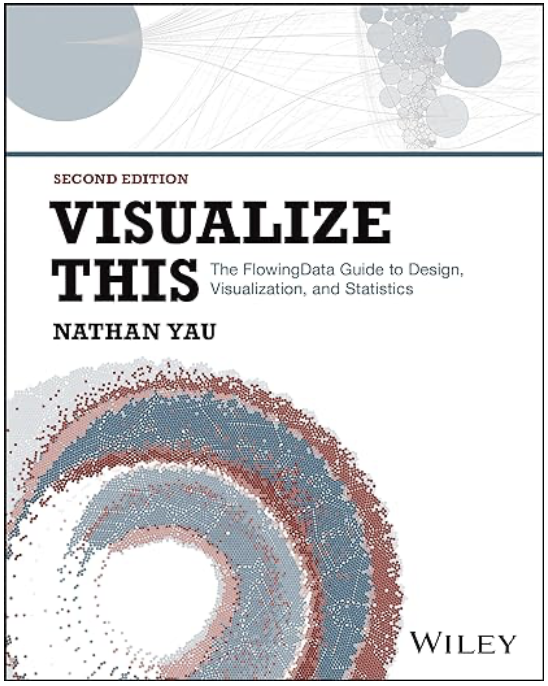
Second Edition

Visualize This: The FlowingData Guide to Design, Visualization, and Statistics (2nd Edition)
New tools, refined process.

Order: Amazon / Bookshop

Browse by Chart Type See All →

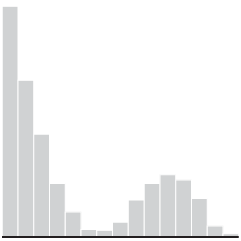
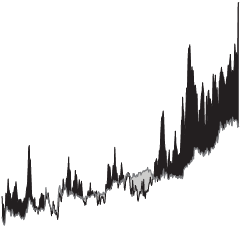
Chord Diagram Glyph Chart Histogram Strip Plot Difference Chart Square Pie Chart Grid Map Dot Density Map Organogram Heatmap

Browse By Topic

  • Visualization

    Seeing data

  • Maps

    Seeing geographic data

  • Infographics

    Explaining data

  • Networks

    Connecting data

  • Statistics

    Analyzing data

  • Software

    Working with data

  • Sources

    Getting data

  • Design

    Making data readable

Made by FlowingData

  • The Process

  • Data Underload

  • Chart Everything

  • Guides

  • Books

  • Shop

  • About
  • Contact
  • LinkedIn
  • Bluesky
  • Instagram
  • RSS
Copyright © 2007-Present FlowingData. All rights reserved.