Mapping

  • FIFA development work around the world

    November 26, 2012 to Mapping by Nathan Yau

    FIFA Development world

    Studio NAND and Moritz Stefaner, along with Jens Franke explore FIFA development programs around the world.

    The FIFA Development Globe visu­al­ises FIFA's world­wide involve­ment in supporting foot­ball through educa­tional and infra­struc­tural projects. Using a 3D globe in combin­a­tion with inter­con­nected inter­face and visu­al­iz­a­tion elements, the applic­a­tion provides multiple perspect­ives onto an enormous dataset of FIFA's activ­ities, grouped by tech­nical support, perform­ance activ­ities, and devel­op­ment projects.

    The globe itself is an icosahedron, or essentially a spherical shape made up of triangles. Triangles in each country represent programs and are colored by the three above categories, and you might recognize Moritz' elastic lists in the sidebar to filter through programs, by country, organization, and type. There's also a timeline view, which shows program development over the past five years.

    Give it a go here. I should warn you though that it runs in Flash (a client requirement), and it could run sluggish depending on your machine. Sometimes I was disorientated by the interaction and animation, especially when I clicked and nothing happened until a few seconds later.

  • Beautiful interactive tour of the galaxy

    November 15, 2012 to Mapping by Nathan Yau

    Galaxy

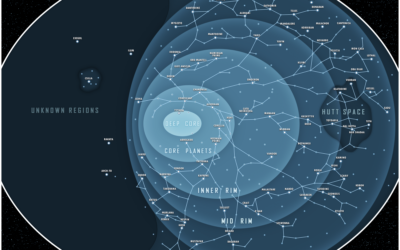
    In a beautiful rendition of the galaxy, Google visualized 100,000 stars, starting at the sun and out to a view of the Milky Way. Start with the tour, which takes you through an overview of what there is to see, and then explore on your own. Specifically, once you zoom out over four light years away from the sun, you start to see other known stars. Click on the labels for information and a closer look at what looks like flaming balls of lava. [via @pitchinc]

  • Mapping racist tweets

    November 9, 2012 to Mapping by Nathan Yau

    Racist tweets

    After seeing this post that highlights racist tweets after the election, Floating Sheep took a closer look at the geography. Using an estimate that takes into account number of tweets per state, the southeast came out green.

    So, are these tweets relatively evenly distributed? Or do some states have higher specializations in racist tweets? The answer is shown in the map [above] (also available here in an interactive version) in which the location of individual tweets (indicated by red dots) are overlaid on color coded states. Yellow shading indicates states that have a relatively lower amount of post-election hate tweets (compared to their overall tweeting patterns) and all states shaded in green have a higher amount. The darker the green color the higher the location quotient measure for hate tweets.

    I wondered about Asian remarks after seeing this, but a quick search was depressing and I stopped. [Thanks, Matt]

  • Maps before maps

    November 8, 2012 to Mapping by Nathan Yau

    Maps before maps

    Amanda Uren has a fun collection of map-like scans from the 11th century. Some of them are geographic, but most of them are more like rough sketches of how the individual saw the area the image represents. It's like those stereotype maps that people like to make, except no one's trying to be funny.

  • 2012 political donations mapped over time

    November 5, 2012 to Mapping by Nathan Yau

    Following their animated and narrated visualization on political contributions over time, VisPolitics maps Boston political donations in MoneyBombs.

    This video of the Boston metropolitan area reveals the geographic distribution of political donations made by individuals throughout 2012. We identify two types of temporal bursts of campaign contributions. We call both "moneybombs" because they reveal a temporal clustering. The first type occurs when many small donations are given on the same day to a candidate. We call this a grassroots moneyb omb. The second are bursts of extremely large donations, that take advantage of campaign finance laws and allow individuals to donate more than the traditional $5,000 limit. We call this the Joint Committee moneybomb.

    Like in the first project, the narration provides a clear view of the data in front of you. There are also videos for just presidential donations and Republican and Democratic donations.

    [Thanks, Mauro]

  • Sandy aftermath: Power outages and flooding

    October 30, 2012 to Mapping by Nathan Yau

    Sandy aftermath

    The New York Times provides a detailed look at the Sandy aftermath, across states and locally. With millions of people losing power in a short amount of time, the outages map and chart is the most dramatic.

    More than six million customers lost power Monday as Hurricane Sandy felled trees, downed power lines and flooded substations. The storm led to power failures in at least 17 states, including more than a million customers in Pennsylvania and New Jersey and about 660,000 in New York City.

  • Browse elections data back to 1976 with Electionary app

    October 30, 2012 to Mapping by Nathan Yau

    Electionary

    Electionary, the new iPad app from TargetPoint Consulting, lets you browse national election data, from 1976 through 2008.

    Electionary is an election resource center that grants users access to over 30 years of county, state, and national election data. Electionary transforms election results into an easy to understand, interactive, and visual format. Users are able to see detailed election results and voter turnout percentages from across the country. Users can compare election results side-by-side and see how one county or state has changed over time or see how two counties or states are different.

    There were a few spots interaction-wise when it didn't do what I was expecting, such as pinch or double tap to zoom, or when I switched years, the map would re-center on the selected state or county instead of staying where I had panned. But if you're interested in historical elections data, Electionary ain't bad, and I can only imagine there'll be un update after elections night.

  • Hurricane tracker for Sandy

    October 29, 2012 to Mapping by Nathan Yau

    Hurricane tracker by New York Times

    The New York Times has an updated version of their hurricane tracker up with map, satellite, and radar views. Stay safe, east coasters.

    See also the live wind map by Martin Wattenberg and Fernanda Viegas, which has proven useful a couple of times this year.

  • Insisting on beautiful maps

    October 25, 2012 to Mapping by Nathan Yau

    Atlas of Design table of contents

    In the Atlas of Design, published by the North American Cartographic Information Society, Timothy Wallace and Daniel Huffman argue for beautiful maps that are a joy to examine.

    Design and aesthetics matter, because form is not secondary to function; form is integral to function. A map cannot function if it remains unread. To truly engage map users requires that we present them with something worth looking at. Something that they will want to spend time studying. Something that acknowledges the human need for beauty. Something that causes the user to think about the map in terms beyond whether or not it simply "works."

    Yep.

  • Tracking homicides in Washington, D.C.

    October 19, 2012 to Mapping by Nathan Yau

    Washington homicide map

    In a multipart special report, The Washington Post investigated homicides in the nation's capital between 2000 and 2011.

    A Washington Post review of nearly 2,300 slayings in the city between 2000 and 2011 found that less than a third have led to a conviction for murder or manslaughter, although the numbers have improved in the past few years. More than 1,000 cases remain unsolved.

    In a 15-month study, The Post individually tracked every homicide in the District between 2000 and 2011 to learn what ultimately happened to each ensuing case. Such studies, known as longitudinal, are not generally produced by law enforcement, because they are considered to be too time-consuming.

    The interactive portion of the report lets you see the data from a number of angles. The focus is on the map, which shows an overview of homicide count and then individual cases as you zoom in to neighborhoods. Navigation on the left lets you filter by case status, race, age, motive, and manner, and the display on the bottom left changes as you change queriers or select different parts of the map. You can also play a time lapse, and the map updates for each year.

    There's a lot to look at from different angles, and especially if you live in the area, the feature is worth a closer exploration.

    As a side note: The Post graphics team seems to have upped their game as of late. I'm not sure what they put in the water over there, but I hope they keep drinking it. [via Source]

  • Solar energy potential, mapped in Cambridge

    October 15, 2012 to Mapping by Nathan Yau

    Solar energy

    Sustainable Design Lab at MIT and MoDe Studio estimated the potential hotspots for electric photovoltaics in Cambridge, Massachusetts and mapped it.

    "High PV Potential Area" is the footprint, in square feet, of the portions of a roof that, by considering both the real surface projection to its actual slope and this surface's annual irradiation, yield a "good" to "excellent" result. These values are based on MIT's calculations and are shown as orange and yellow dots on the viewer, respectively.

    If all the door-to-door salesmen trying to sell me solar panels showed me something like this for where I live, I'd be a lot more receptive.

  • State of polar bear populations

    October 10, 2012 to Mapping by Nathan Yau

    State of the polar bear

    There are an estimated 20,000 to 25,000 polar bears in the world, and the population is expected to decline by 30 percent over the next three generations. Periscopic, in collaboration with the Polar Bear Specialist Group, highlighted the changing populations in this interactive.

    The data can be viewed by subpopulation, by nation, and by ecoregions. In the first two views, you can click on geographic regions to see more details about the area, which includes a text overview and time series for more troubling numbers on polar bears killed by humans and pollution. Finally, when you click on a time series or the pollutant levels, you can see the data at a higher granularity.

    So there are a few ways to examine the data and different angles to explore. You'll want spend some time with this one.

  • Game: Match states on a blank map

    October 1, 2012 to Mapping by Nathan Yau

    Match states on a blank map

    In case you're interested in learning how much you suck at US state geography, here's a game to help. The goal is to match up states on the blank country map, and you end with an average error in miles. I did not do well. [via kottke]

  • Global cloud coverage

    September 26, 2012 to Mapping by Nathan Yau

    Global cloud coverage

    In the latest Chrome experiment, Google mapped cloud coverage around the world in Cloud Globe. The interactive animation shows coverage from July 1, 2010 to September 12, 2012, with a globe that you can move around as expected and a timeline on the bottom that indicates high levels of coverage. As the animation plays through, storms are highlighted with a circle and pointer. Finally, you can turn on the vegetation layer, and the green regions happen to be under the clouds. Imagine that.

  • Bike patterns

    September 26, 2012 to Mapping by Nathan Yau

    Jo Wood, a professor of visual analytics, visualized five million bike rides using data from Barclays Cycle Hire.

    In the animation (see below) the least travelled routes begin to fade out after about 15 seconds - "like a graphic equaliser," says collaborator Andrew Huddart, also at City University. Around the 1-minute mark, structure emerges from the chaos and three major systems become clear: routes around, and through, the lozenge-shaped Hyde Park in the west, and commutes in and out of King's Cross St Pancras in the north and between Waterloo and the City in the east.

    Each arc represents a trip from point A to point B (obviously not a true path or we'd see roads), and flow direction indicates which way people went the most between the two. [via The Guardian]

  • Voting similarities between Netherland cities

    September 18, 2012 to Mapping by Nathan Yau

    Voting similarities between Netherland cities

    This month the Netherlands held national elections, and now that the results are in, interaction designer Jan Willem Tulp had a look at voting similarity between cities. I'm not sure what metric was used to judge similarity, but it looks like it was based on voting distributions for candidates.

    Each circle represents a city, and you can choose between a geographic layout or a radial one. When you select a circle, the others change size and color, where more red and larger means more similar. In the radial layout, circles that are farther are away are less similar. Be sure to look at the city of Urk in the radial layout. According to Tulp, it's the most religious city, and it votes completely differently from the rest. [Thanks, Jan]

  • Presidential campaign stops mapped

    September 12, 2012 to Mapping by Nathan Yau

    Presidential campaign stops

    Emily Chow, Ted Mellnik, and Karen Yourish for The Washington Post mapped where the candidates and their wives have visited since June in an interactive with filters and multiple views.

    On load, you see the visits of the eight, with a comparison between Democrats and Republicans. The map on top shows where, and the time series on the bottom shown when. Click on the map, and it zooms to show visits at city-level, and a click on a time slice updates a list of individual visits. Furthermore, you can select the individuals or categories for just the last 30 days, fundraisers, or your state.

    The interaction lets you narrow down quickly and easily to what you care about. The only other thing I would've liked to see is a tighter coupling between the time series and the map.

  • How people are connected on Facebook, by country

    September 11, 2012 to Mapping by Nathan Yau

    Facebook stories

    As part of the Stories initiative that Facebook launched yesterday, an interactive map by Stamen Design shows how people are connected on Facebook, which offers a view into how countries are linked by language and history.

    Immigration is one of the strongest links that seems to bind these Facebook neighbors, as thousands of people pour over borders or over seas, seeking jobs or fleeing violence, and making new connections and maintaining old friendships along the way. Economic links, through trade or investment, also seem to be strong predictors of country connectedness. And finally, one of the most overwhelming trends we found as we explored this graphic is the strong tie that remains between nations and their former colonizers, whose continued linguistic, cultural, and economic ties still echo today.

    Stamen also explained other interesting facets in the map.

    When you click on a country, the map updates to show where friends of those in that country are from. The top five are labeled. So whereas previous Facebook maps showed all connections at once, which focused on how many people use the service, this one focuses on the actual connections and what they mean.

  • Mapping urban footprint

    September 4, 2012 to Mapping by Nathan Yau

    London footprint

    After identifying 129 metropolitan regions that represent 35 percent of the world's urban population, LSE Cities mapped some of the densest areas with a simple black and white color scheme. The patterns reveal a footprint of where the much of the world's population lives.

    To get a sense of the spatial dynamics of these city regions, we mapped 12 cases at the same scale with core built-up areas in black and peripheral areas in grey. By comparing the footprint of the world’s largest urban conurbation in Tokyo with Atlanta, our sample’s most land-hungry city region, we see that roughly the same amount of land is occupied by 42 million as by 7.5 million people. Meanwhile, the map of London shows that 14 million people are spread across South-east England.

    In other words, that's a whole lot of people packed into Tokyo. I wonder what these maps would look like with Tokyo density.

  • How NASA visualizes large datasets

    August 31, 2012 to Mapping by Nathan Yau

    Horace Mitchell, director of the NASA Scientific Visualization Studio discusses the process behind their visualization that shows estimated surface currents around the world, Perpetual Ocean.

    Once we have the data set, then we bring two things to bear. I'm a scientist by training — I have a doctorate in physics and I did research for about a decade — but everyone in my group has a level of understanding what the point is of all these animations. We know what we're doing, and what we're trying to bring out. Then, the team is amazing — working together, they play off of each other and every person in the team has a separate project they're working on. They're always bouncing ideas off of each other. As a result, over the last 10 or 20 years, we've gotten very good at figuring out what we can do. We have tools we can bring out at the drop of a hat to do certain kinds of visualizations. But we're always thinking about the next thing, and what we can’t do yet.

    People miss that very first part a lot of the time: "Once we have the data set..." No data means nothing to show.

Unless otherwise noted, graphics and words by me are licensed under Creative Commons BY-NC. Contact original authors for everything else.