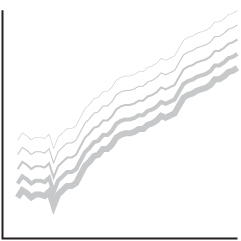
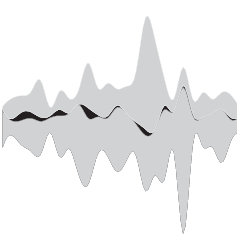
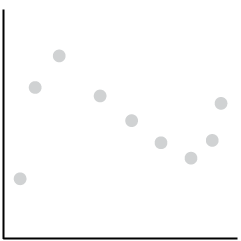
This week, we look at the making of a treemap on income, following a decade of other charts. All paths lead somewhere.
This week, we look at the making of a treemap on income, following a decade of other charts. All paths lead somewhere.

Michael Friendly, known for piecing together the history of visualization, chatted with Cabinet of Infographic Curiosities. I liked this tidbit on Charles-Joseph Minard:
Minard would likely be unknown today, if Marey had not so aptly said his flow map of Napoleon’s March on Moscow “defied the pen of the historian by its brutal eloquence.” Funkhouser picked this up, and then Tufte anointed it as “the greatest graphic ever drawn”. But in his time, Minard was just an engineer working for the École Nationale des Ponts et Chaussees (School of Bridges and Roads) in Paris. The corpus of his work lay buried in the archives of the ENPC. Today, Paris celebrates its intellectual and artistic heroes with place names, like Rue Descartes, Place Monge, …but there is nothing named for Minard. Not even his burial place was known until Antoine discovered this in Montparnasse Cemetery, and Les Chevaliers met for lunch and a celebration at his grave, where a small plaque was installed.
When Zillow removed climate risk scores from property listings, many assumed the company acted out of political pressure. The main issue though was that the risk models behind the scores were not reliable enough. For Bloomberg, Eric Roston reports:
“You have to know something about the individual structure — its foundation, the presence of a basement, first-floor height,” says Howard Botts, chief scientist of Cotality.
Each assumption that a model makes, implicitly or explicitly, adds another layer: land slope, a building’s use, how many stories it has.
“‘Climate risk’ is much more than just the physical hazard,” agrees Adam Pollack. “The relationship of hazard and the built environment — and damage — is the actual risk.”
Most climate models are abstract and high level out of necessity. Assessing risk at the individual level is tricky, especially when there are so many variables to consider. Plus, in the case of individual homes, the value of each is especially relevant to both buyers and sellers. You can’t just give a sweeping aggregate.

As hurricanes and wildfires grow more common in some areas, home values go down and insurance premiums go up. Claire Brown and Mira Rojanasakul report for the New York Times:
Since 2018, a financial shock in the home insurance market has meant that homes in the ZIP codes most exposed to hurricanes and wildfires would sell for an average of $43,900 less than they would otherwise, the research found. They include coastal towns in Louisiana and low-lying areas in Florida.
The Midwest seems to be hit hard by insurance premiums as well. I did not know hail was such an issue.
In parts of the hail-prone Midwestern states, insurance now eats up more than a fifth of the average homeowner’s total housing payments, which include mortgage costs and property taxes. In Orleans Parish, La., that number is nearly 30 percent.

The cost of streaming services keeps going up. There are plans with and without ads. Standard and premium options. For the Wall Street Journal, Melissa Korn, Elizaveta Galkina, and Stephanie Stamm charted the rise in prices across the major services and the companies’ shifted priorities from acquiring new customers to making a profit.
Years ago, I was reasoning my way out of cable television, which I did eventually. As streaming continues its convergence with cable, I’m figuring out when to get rid of streaming services, because it’s cheaper to just buy physical copies or check out DVDs from the library.

The United States Geological Survey published composite maps and data for the country’s geological makeup.
The Earth’s Surface geology layer depicts geologic units exposed at the Earth’s surface in the conterminous United States, ranging in age from Quaternary glacial deposits and alluvium to Precambrian crystalline bedrock. In the U.S. West and Southeast, the map is a composite of 29 state geologic maps depicting geology at the Earth’s surface. In the glaciated region of the Midwest and Northeast, the map is a composite of 21 state geologic maps depicting pre-Quaternary rocks (“bedrock”), 8 state geologic maps depicting Quaternary deposits, and 18 USGS Quaternary Atlas Series maps depicting Quaternary deposits. The Quaternary Atlas maps were used where modern state geologic maps were not available.
You can download the data and other map layers through USGS. As per the title, the above only shows the surface. They have data that stretches back billions of years ago.
[via Beautiful Public Data]

Reddit user ViKoToMo scraped Costco receipts from his account and made a dashboard that shows spending for the past two years.
This short script by Ankur Dave was used to access Costco receipts. I’m not sure how long that’s going to work, but there you go, in case you also would like to see how many thousands of dollars you spend on organic chicken thighs, bananas, and street tacos.

Every month I collect visualization tools, datasets, and learning resources. This is the good stuff for November.

Speaking of traffic fatalities, Helsinki is doing things differently. Amanda Shendruk for Not-Ship has the charts:
This past summer, Helsinki made an astonishing announcement: as of August, the Finnish capital went an entire year without any traffic deaths. Not a single pedestrian, cyclist or driver died on the city’s roads. Not. One.
And this wasn’t an outlier year. Helsinki’s traffic deaths have been steadily declining for decades.
Lower speed limits and income-based speeding fines helped the city get to this point. Maybe others should give this a try.
Sidenote: Not-Ship is a new data-focused newsletter from Shendruk that is worth a sub.

For the Washington Post, Ian Duncan, Emmanuel Martinez, and Dylan Moriarty analyzed traffic fatality data from the National Highway Traffic Safety Administration:
The Post analysis documents, for the first time, a sharp increase in places with clusters of pedestrian deaths, revealing the deadliest neighborhoods and stretches of road in hundreds of cities. The number of locations with at least three recent pedestrian deaths clustered within a mile of one another tripled during this period, from more than 275 in 2010 to more than 825 in 2023, The Post found. Those hot spots increased most in states in the southern half of the country such as Tennessee, North Carolina and Arizona.
A searchable map lets you see incident counts in places of interest, which is unsettling when you see dots and hexagons not far from where you live.

Is your salary high, low, or somewhere in the middle? What do people with higher salaries than you do for a living? Doctors, lawyers, and tech workers come to mind, but there is a wider range of occupations, depending on the income level you’re comparing against.

The Washington Post examined political contributions from the 100 wealthiest Americans, which have shown big swings the past few years.
What changed? Republicans long characterized Silicon Valley as a bastion of liberalism. But over the past half-decade, many of tech’s wealthiest titans rebelled against the Biden administration’s criticism and policing of their industry. Last year, many tech barons threw their support behind the GOP, which they saw as more aligned with their often-libertarian ideals and their companies’ economic interests. Trump and his party actively wooed influential tech leaders, embracing cryptocurrency and promising to limit AI regulation. His vice president, JD Vance, formerly worked as a venture capitalist in San Francisco, forging ties to Thiel, former Google CEO Eric Schmidt and venture capitalist Marc Andreessen.
It’s all about the money, as usual.

Randall Munroe, of xkcd, illustrated fifteen years with his wife. It is very good and especially meaningful during this Thanksgiving weekend. It’s a continuation from previous comics for two years, seven years, and ten years.
I always appreciate how xkcd uses deceptively simple stick figures and yet, the comic remains one of one.

Government organizations love to distribute documents as PDF files. They are easy to forward and to print. The problem is when you want to find and access them later among millions of other files. GovScape, a research project between the University of Washington and Boston University, provides a search interface through the End of Term Web Archive’s 2020 crawl.
The code for GovScape is open source and available on GitHub. I have a feeling such a tool will grow more important going forward.

The Trans News Initiative is a collaborative effort to track news coverage of trans communities over time. A streamgraph shows article counts by topic, between 2020 and the present and clicking through shows a set of packed circles and tables that link to each article.
On the classification of articles:
Wire stories published by multiple outlets were treated as individual articles instead of collapsed, prioritizing news dissemination and reach over unique reporting. Generic news round-ups and recaps (e.g., “Weekend Report”, “Top Stories”, “News Roundup”) were filtered from the event data. We then used the RoBERTa-base model to assign embeddings to each article headline, and employed these embeddings to cluster the output using HDBSCAN. The clusters were labelled using an LLM aimed at creating an umbrella cluster phrase from the individual article headlines in the same cluster.
This system was used to identify themes, which again, you can see over time.

Congress released a collection of emails from Jeffrey Epstein’s inbox. However, as one might expect, it was not in the most usable format. Jmail, made by Luke Igel and Riley Walz, puts the emails in a more familiar Gmail view. Now you can pretend you’re logged into Epstein’s account and search and browse the threads.

The New York Times used a mix of media and data sources to reconstruct the flooding at Camp Mystic.
What follows is the most detailed description to date of the events that took the lives of more than two dozen campers and counselors, and the elder Mr. Eastland, at the 99-year-old summer retreat.
The descriptions and rendering of those events were taken from the first interviews that Camp Mystic’s owners have granted, along with never-before-seen videos and photos taken during flooding at the camp, data from devices such as Apple watches, cell phones and vehicle crash data, and court documents from a lawsuit filed by some of the parents of children who died.
The animated water flow and photos help you understand the scale and speed of the flooding, in relation to the 28 lives lost. Tragic from every angle.

If Elon Musk achieves certain benchmarks for Tesla over the next decade, he gets a $1 trillion bonus. While unlikely Tesla gets there, a trillion is kind of a lot, especially for one person. But our human brains aren’t great at imagining numbers at that scale. So, for the Washington Post, Alyssa Fowers and Leslie Shapiro scaled a trillion by total U.S. workers in a given job.
I like to think in units of number of Jack in the Box tacos I can buy, but I guess that’s more useful for smaller values. Although less so recently. Thanks, inflation.
It’s crazy that just a few years ago we were looking at how comical Jeff Bezos’ net worth of $172 billion was at the time. Pocket change now.

Last year, I documented my experience with Claude, the AI chatbot, for working with and visualizing data. It seemed like a good time to revisit.

Monarch butterflies somehow fly from Ontario, Canada to Mexico City, but the migration patterns were unknown. A small sensor to tag individual butterflies might provide the answers. Dan Fagin, with graphics by Jonathan Corum, reports for the New York Times on the rice-sized, solar-powered radio tag.
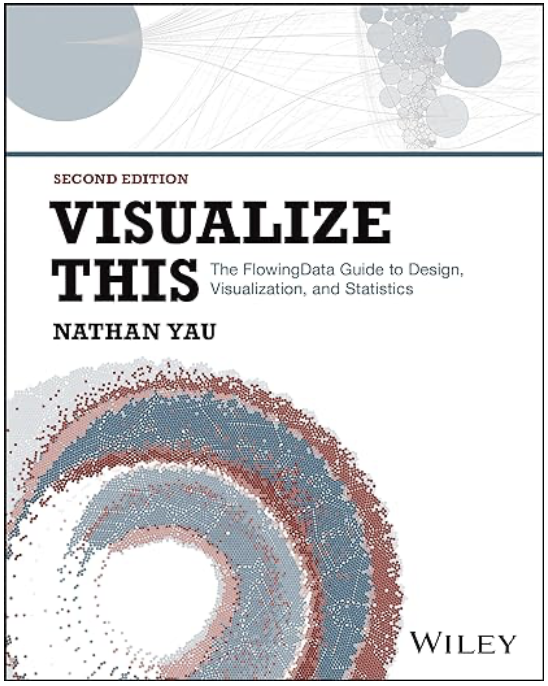 Visualize This: The FlowingData Guide to Design, Visualization, and Statistics (2nd Edition)
New tools, refined process.