2010 June

  • Modern history of human communication

    June 30, 2010 to Infographics  •  Share on Twitter  •  Comments (8)

    Modern History of Human Communication (infographic)

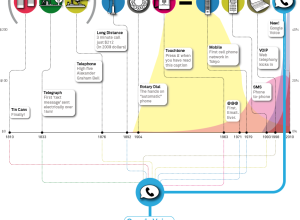
    With the announcement of Google Voice for everyone, the big G describes the history of human communication in the graphic above - and consequently, how Voice is the next step in the evolution. We begin with the tin cans in 1810, to the telephone in 1876, then the first email in 1971, and tada, we arrive at Google Voice in the present. Average international call cost per minute serves as the backdrop.

    I gotta get me one of those vintage mobile phones of 1979.

    [via]

  • Facts and figures of London life

    June 30, 2010 to Data Art  •  Share on Twitter  •  Comments (1)

    24 hours in London

    Field Design takes a look at a day in London:

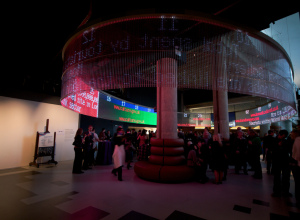
    LDN24 is a new public art installation for the Museum of London. It draws filmic impressions and the facts and figures of London life into a picture of 24 hours in the life of the city. Statistics and statements from the web and a huge database are printed along the LED screen by the seconds' hand of a 24 hours clock. Weather, traffic and news updates, the Thames' tides, Tube updates and recent fire incidents are pulled live from numerous RSS feeds, Twitter and news portals.

    I can easily see myself standing there entranced by the display for a long while - if I were from London. What I really want is a big circular display like for a day in the life of Nathan.
    Continue Reading

  • Imported World Cup players

    June 29, 2010 to Network Visualization  •  Share on Twitter  •  Comments (26)

    multicultural sports

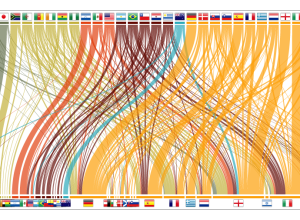
    The World Cup is an event where countries from all over the world compete, but what about the teams themselves? Players may play for a single country, but many are 'imported' from elsewhere in the world as their day jobs are actually elsewhere. This isn't a new thing, but teams have certainly become more multicultural over the years. Continue Reading

  • Texting volume during World Cup matches

    June 29, 2010 to Infographics  •  Share on Twitter  •  Comments (7)

    Texting volume time series

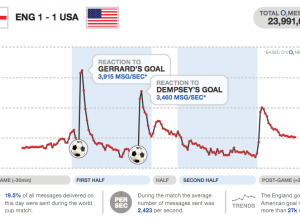
    I love how major sporting events can captivate an entire country or region, especially when there's the data to show the collective pulse. We saw it during the Canada-United States hockey gold medal match. Everyone flushed together. Similarly, O2, a UK mobile service provider, shows us texting volume during the World Cup and highlights the points of interest. England scores a goal and there's a flood of text messages. Goooal. Continue Reading

  • Education crisis explained in motion graphics

    June 28, 2010 to Infographics  •  Share on Twitter  •  Comments (17)

    Education crisis in motion graphics

    Buck, in collaboration with TakePart and An Inconvenient Truth director, Davis Guggenheim, describe the education crisis in America in motion graphics for upcoming documentary, Waiting for "Superman". Watch the video below. It's a more or less a run of education vitals, but it flows well and has a nice look and feel.

    Plus, it's an important subject we should know about. Maybe a new movement will get going once education gets the "inconvenient" treatment.
    Continue Reading

  • Rotten Movies

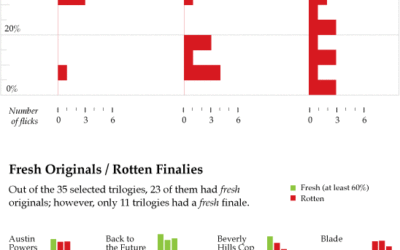
    Do Movie Sequels Live Up to Their Originals?

    The third installment of Pixar's Toy Story is making a killing at the box office (rightfully so, because it's Pixar-tastic),...
  • Happy birthday, FlowingData. You’re three today

    June 25, 2010 to Announcements  •  Share on Twitter  •  Comments (19)

    Can you believe it? FlowingData is three years old today. I'm in the middle of a cross-country move, so I can't get into the number rundown like I usually do, but I just wanted to take this chance to thank all of you for reading. Thanks for sharing links with your friends and sending in suggestions. Every retweet, like, digg, and stumble helps FlowingData reach a wider audience.

    It seems so long ago when I was just rambling to myself around here. Now there are 40k of you. Next year, 100k?

    Thanks to all the sponsors too, past and present, who help keep the gears turning around here. I couldn't have done it without you.

    Happy birthday, FlowingData!

    Grab a sticker and show your undying love for FD for everyone to see :).

  • Music animation machine

    June 25, 2010 to Data Art  •  Share on Twitter

    Debussy, Clair de lune

    Anyone can listen to music, but how can you see it? The Music Animation Machine plays music (ancient MIDI files) and displays it in real-time. On the vertical are notes and time runs on the horizontal. Here's Debussy's classic Clair de lune, otherwise known as that song from the Ocean's 11 through 13 soundtrack, where they all gather at the fountain and give a nod of recognition to each other. Continue Reading

  • Wireless networks in the physical world

    June 24, 2010 to Network Visualization  •  Share on Twitter

    wireless networks

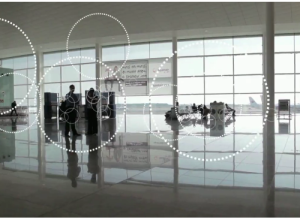
    For the most part, you go about your day-to-day with little knowledge of all the bits and networks you walk past or intersect with. Designer Timo Arnall visualizes these wireless networks of WiFi, bluetooth, etc. in the physical world (video below). It's a simple idea. As we move through the landscapes, white dashed circles move around buildings with WiFi and people carrying mobile gadgets. Continue Reading

  • Graph site Verifiable closes shop

    June 24, 2010 to News  •  Share on Twitter

    After a few years of fighting the good fight, charting and data site Verifiable closes shop in August. The idea spawned during an Edward Tufte workshop and developed into an effort to provide a tool that people could come to for facts by the numbers. Continue Reading

  • How to beat Mario Brothers 3 in 11 minutes

    June 23, 2010 to Infographics  •  Share on Twitter  •  Comments (4)

    Beat Mario in 11 Minutes

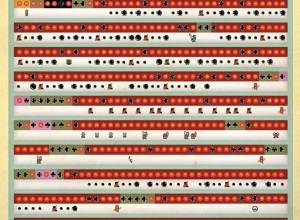
    I think it took me a few months to beat Super Mario Brothers 3 on Nintendo. Follow the directions in this graphic, and you should be able to beat it in 11 minutes. It'd probably still take me a few months. My video game talents tapped out at Kaboom on Atari. [via]

  • Taxonomy of the iPhone

    June 23, 2010 to Data Art  •  Share on Twitter

    iphoneMap2-Heidegger-01

    Ben Millen diagrams the reach of the iPhone in our everyday lives:

    These are not maps in any conventional sense, but rather diagramatic representations of the interconnected space of technology, capital, instrumental value, exchange value, social and environmental impact that surround the device.

    The tube map metaphor is a little worn, but this is subtle, so it's not so bad. There are two maps. One covers the mechanics of the phone while the second is more about how consumers use the phone. The former is the more interesting one.

    So who's going to do the map for my 2004 Samsung flip? It takes a lickin' but keeps on tickin'.

  • What America spends on gas and auto

    June 22, 2010 to Mapping  •  Share on Twitter

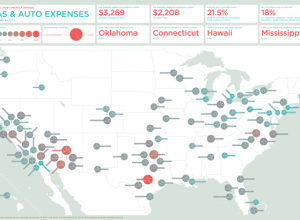
    Infographic Getting Around Cities

    In a follow-up to their graphic on what America spends on food and drink, personal finance site Bundle, with the help of Nicholas Felton, looks at money spent on gas and auto expenses in major US cities:

    The average household spent $5,477 on gas and auto expenses last year, according to Bundle data, an amount which accounts for about 14.5 percent of daily spending.* That's more than we spend on groceries or utilities, and more than we spend on travel, entertainment, clothes and shoes, and hobbies — combined.

    The sticking-out label thing doesn't really do it for me. The coloring makes the graphic worthwhile though, and the scaled two-section pie charts are pretty good too. What's going on down there in Austin?

  • Quantified Nerds

    June 22, 2010 to Self-surveillance  •  Share on Twitter  •  Comments (13)

    The quantified self sounds great on paper. The task: keep track of important facets of your daily life. The result: gain a better understanding of your day-to-day and make better educated decisions, based on the numbers instead of false assumptions and shots in the dark. What's not to like? Everyone wants to improve his or herself in some way.

    To outsiders looking in though, tracking your life in data is ridiculous.

    Who has the time to keep track of what you eat, when you sleep, and how many times you fart in the wind? To most people, data journaling (a.k.a. self-surveillance, lifetracking, lifestreaming, personal informatics) seems like a complete waste of time, and I don't blame them — for now.
    Continue Reading

  • Graphical data fiction

    June 21, 2010 to Data Art  •  Share on Twitter

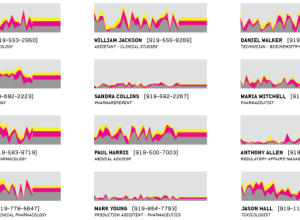
    Graphical data fiction

    We like to talk about the stories in data. They are the information and meaning in the numbers, and are meant to represent truth. Artist Kim Asendorf turns this around a bit and uses a series of made-up visualization pieces to tell a fictional story. It is the story of John.

    John is a scientist working in a corrupt lab called Sumedicina in Durham, North Carolina. The lab is in the business of selling vaccines, which is all well and good, but the problem is that they're the ones creating and spreading the viruses that their vaccines fight against. John is the lead scientist who creates these viruses.

    His conscience gets the best of him though, and he destroys the highly dangerous virus they are are currently working on and then quits. Sumedicina is having none of it. John is on the run. This is his story in data.

  • Comment to win a copy of ‘Beautiful Visualization’ – winner announced!

    June 21, 2010 to Contests  •  Share on Twitter  •  Comments (500)

    Continuing with the 'Beautiful' series, O'Reilly has released their newest one, Beautiful Visualization.

    This book examines the methods of two dozen visualization experts who approach their projects from a variety of perspectives -- as artists, designers, commentators, scientists, analysts, statisticians, and more. Together they demonstrate how visualization can help us make sense of the world.

    Like others in the series (e.g. Beautiful Data, Beautiful Code), Beautiful Visualization is a compilation of essays from twelve people and groups who work in the field, and it's a very mixed bag. Regular FD readers will recognize many of the names: Fernanda Viegas, Martin Wattenberg, Aaron Koblin, Robert Kosara, Nick Bilton, and Jer Thorp, among others.
    Continue Reading

  • Free kick mechanics explained

    June 20, 2010 to Infographics  •  Share on Twitter

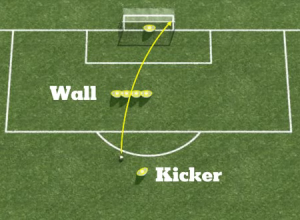
    bend it

    I know next to nothing about soccer (a.k.a. football), but I gotta admit this Brazil vs. Ivory Coast match is more exciting than I thought it'd be. I can't say the same about the vuvuzelas though. In any case, to help neophytes like me, the New York Times graphics have helped a lot. Their most recent explains the mechanics of the free kick. They describe two approaches in the animated feature: the straight blast and the bend. Continue Reading

  • Dabble DB acquired by Twitter

    June 18, 2010 to News  •  Share on Twitter  •  Comments (3)

    Smallthought Systems, the group behind Dabble DB, the easy-to-use online database system and Trendly, the exploration tool built on top of Google Analytics data, was acquired by Twitter last week:

    Avi, Ben, Luke and I will be moving down to San Francisco this fall to work in Twitter's great downtown offices. We'll certainly miss everyone we're leaving behind, but at the same time we're excited about a new adventure. One great consequence of this is that the four of us will finally all live and work out of the same city — that has never happened before!

    On Smallthought's side of the table, they're joining a great company with a huge, unique, and exciting dataset i.e. billions of tweets. On Twitter's side of the table, they're getting a great team who knows data and how to help people make use of it. So it's great news all around.

  • Profitable sweet spot for startups

    June 18, 2010 to Infographics  •  Share on Twitter  •  Comments (2)

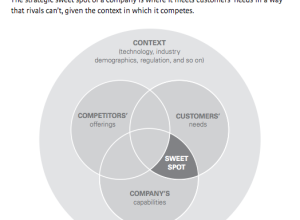
    strategic sweet spot

    Gosh, it's so easy. I'm going to be rich. Get the strategic sweet spot and the three ingredients down, and you're set for life.

  • Maps and data score big grants from Knight News Challenge

    June 18, 2010 to News  •  Share on Twitter  •  Comments (1)

    Since 2007, the Knight News Foundation has awarded millions of dollars in grants to fund "innovative ideas that develop platforms, tools and services to inform and transform community news, conversations and information distribution and visualization." There were 12 grants awarded this year, and three of them deal with maps. The folks at Stamen scored the biggest grant at $400k for their project CityTracking:

    To make municipal data easy to understand, CityTracking will allow users to create embeddable data visualizations that are appealing enough to spread virally and that are as easy to share as photos and videos. The dynamic interfaces will be appropriate to each data type, starting with crime and working through 311 calls for service, among others. The creators will use high design standards, making the visuals beautiful as well as useful.

    That's obviously something we'll need to keep an eye on.

    The other two mapping projects were GoMap Riga (Marcis Rubenis and Kristofs Blaus), which will place real-time local news on maps and Tilemapping (Development Seed), which will be a tool to help journalists make maps more easily.

    Broken record, yes I am, but data is gonna be big I tells ya. Big.

    See the quick ten-second pitches from all twelve winners below. I'm intrigued by The Cartoonist. They're going to use cartoon-like games to get engaged readers and get them involved in the news.
    Continue Reading

Copyright © 2007-2012 by FlowingData. All rights reserved.