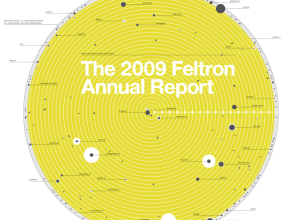
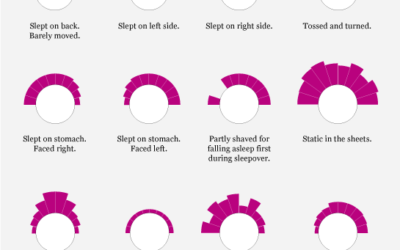
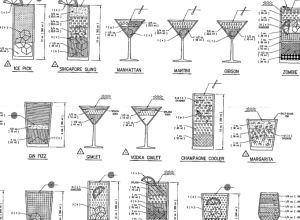
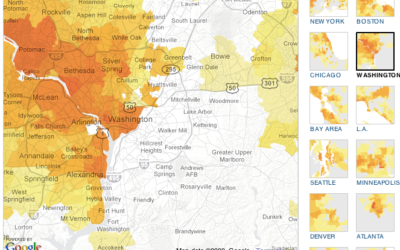
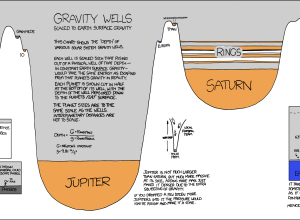
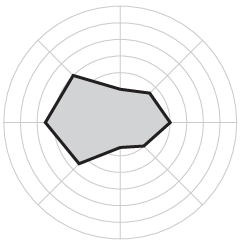
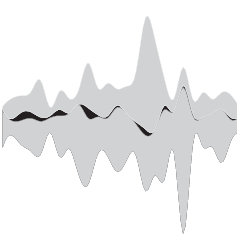
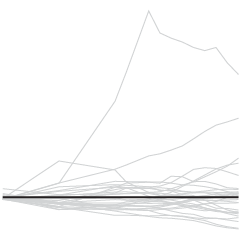
I started the FlowingData Flickr group a little while ago, but didn't come back to it until now. Here are just a few of the graphics you all have added. Click on the images below for the full-size versions.
Continue Reading
2010 January
-
Flickr Group Treats – January 2010
-
Save pens. Use Garamond font
Designers Matt Robinson and Tom Wrigglesworth looked at ink usage of some commonly-used typefaces, by hand-drawing them with ballpoint pens.
Continue Reading -
Beatles Music in Infographics
I'm sure a lot of you love The Beatles. I'm not a huge fan myself, but for those who are, you will love these graphics from designer Michael Deal.
The graphic up top shows the level of collaboration between group members. The level of shared authorship was a lot higher early on and then pretty much died off before the breakup.
Continue Reading -
What day is it? It’s Data Privacy Day!

Today is Data Privacy Day 2010, apparently. Was there a Data Privacy Day 2009? I dunno. To be honest, I didn't even care all that much about data privacy a couple years ago.
But it's grown in importance as everything goes digital (and Google acquires every business under the sun).
Take a moment and think about what Google knows about you. Correspondence and contacts via email, schedule via calendar, interest via feed reader, purchases via Checkout, and most importantly your day-to-day via search. How do you feel about a single company knowing that much about you? Don't you want to know how they use all that data and more importantly, how they protect it?
Continue Reading -
Understanding risk – play it safe or eat a bacon sandwich?
David Spiegelhalter is a Professor of the Public Understanding of Risk at Cambridge University. He studies the choices we make, and how those choices can have an effect later on.
Continue Reading -
The 2009 Feltron Annual Report – OCD Made Sexy
Nicholas Felton's personal annual report on his life is now up. For those not in the know, Felton makes this report every year based on data he has collected about himself. People see the report, and think to themselves, "I want that for my life."
Continue Reading -
Data Underload #6 – Bed Head
(Thanks, Michael for the idea)
-
Dropped Food. Should You Eat it?
Since you'll be trying every single drink recipe in the engineer's guide this weekend, you're most likely going to drop some food on the ground. Consult this flowchart to decide whether to eat it. Results may vary by individual.
Food on the ground, food on the ground. Looking like a fool with your food on the ground.
-
Engineer’s Guide to Drinks
Seeing as the weekend is just about here, I'm sure many of you can find a use for this guide. It's drink recipes hand-drawn like schematics to some circuitry system. I like how color wasn't an option, so instead they used 42 stripe and dot patterns to differentiate ingredients.
See the full version here [pdf].
My sister sent this one along, but I couldn't find the original source. Anyone know?
-
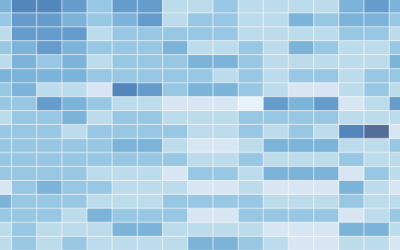
How to Make a Heatmap – a Quick and Easy Solution
A heatmap is a literal way of visualizing a table of numbers, where you substitute the numbers with colored cells. This is a quick way to make one in R. -
Data.gov.uk Gearing Up For Launch, er, Does Launch
Update: I had scheduled this post for next week, but apparently, Data.gov.uk launched today. The site isn't loading for me right now though. I guess they weren't prepared for traffic.
Data.gov, a catalog of US data, launched last year. Now it's the UK's turn. Well, not yet. But soon. Data.gov.uk is still under lock and key, but it has granted access to some developers. Ito Labs, the group behind mapping a year of OpenStreetMap edits posted screenshots of their maps that show vehicle counts (above).
Here are some comparison maps between 2001 and 2008, by vehicle type.
Continue Reading -
The Very First Thematic Maps
I'm admittedly not very good with historical precedent, but I think we can all agree it's important to know about the work those have done before us. It makes your own work better and lets you appreciate what others do more (or less).
Continue Reading -
Thanks, FlowingData Sponsors
Thank you, sponsors. I wouldn't be able to do what I do on this blog without you. It seems like FlowingData is growing faster every month, and you guys make that possible.
Check out what these fine groups have to offer. They help you understand your data:
Tableau Software – Data exploration and visual analytics in an easy-to-use analysis tool.
InstantAtlas – Create and present compelling data reports on geographic maps.
NetCharts – Agile Performance Dashboarding™ for business users.
Xcelsius Engage – Create insightful and engaging dashboards from any data source with point-and-click ease.
Business Intelligence – Visual data analysis made easy. Try 30 days for free.
FusionCharts – Convert all your boring data to stunning charts. Download your free trial now.
Xcelsius Present – Transform spreadsheets into professional, interactive presentations.
Email me at nathan [at] flowingdata [dot] com if you'd like to sponsor FlowingData, and I'll send you the details.
-
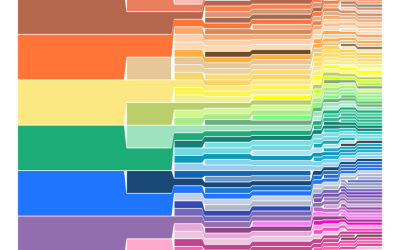
Crayola Crayon Colors Multiply Like Rabbits
In 1903, Crayola had eight colors in its standard package. Today, there are 120, along with special packs like Gem Tones and Silver Swhirls. What happened? Above, from Weather Sealed, shows the growing color selection (and a few color retirements) in the standard package from 1903 to now.
In 2101, Crayola will hit a color peak and revert to a simpler time. The standard pack will have just two colors: black and Tickle Me Pink (#FC89AC).
[via Waxy Links]
-
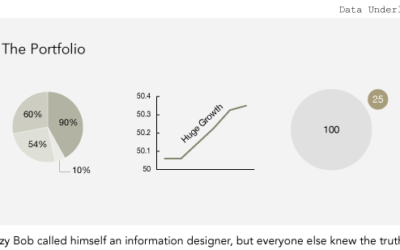
Data Underload #5 – The Portfolio
-
Data Visualization Christmas Ornaments
It's funny how data is finding it's way into everyday objects. There was jewelry a few months ago and coins last month. Now we've got this experiment with Christmas ornaments from Really Interesting Group (RIG). The snowman's head is sized by the number of followers on Twitter; the (rain) bars represent miles traveled per month on Dopplr; the red shows listening habits on last.fm; and finally, the blue one shows apertures you've used over the year for photos uploaded to Flickr. Continue Reading
-
Buy a Print. Support Distaster Relief in Haiti. Please.
Unless you live under a rock inside a cave in the remotest area in the world, you know a huge quake struck Haiti on Tuesday, and much lies in ruins. The New York Times just posted some before and after satellite images, and it's a horrible thing to see. Buildings gone. People gone.
It pains me to think about what if that were to happen to me or my family.
To this end, I'm donating all proceeds from World Progress Report orders, along with this month's FlowingData revenues, to UNICEF's relief efforts. The Report, after all, is an effort to relate to the rest of the world. It only seems fitting. It's not much in the grand scheme of things, I guess, but at least it's something. As they say, every little bit counts.
Again, I'm taking orders for one week - through January 21. Do some good and get something good too. I'm including How America Learns with all orders now. Buy a print now.
Or if the World Progress Report just isn't your thing, you can donate directly to UNICEF.
I mean, seriously, there are 27,000 of you + me. We can make a big difference together.
-
Graphical World Progress Report – Now Available
Want the report? Details at the end on how to get a print. (Update: All proceeds go to UNICEF towards relief effort in Haiti.
UNdata provides a catalog of 27 United Nations statistical databases and 60 million records about the past, present, and future state of the world. Topics include demographics, life expectancy, labor levels, poverty, and a lot more. What does all that data mean though? World Progress Report, the latest from FlowingPrints, offers a look into the expansive UN collection.
In whole, the report tells a story of how we live and die, and the stuff in between.
Continue Reading -
Timescapes to Compare Chopin Recordings
How do you compare music visually? You can break it down into data by quantifying the notes, volume, etc and then visualize it with timescapes (above). The horizontal axis represents musical time, from the beginning to end of a piece. Large blocks show similarities to other pieces and smaller noisy chunks show more "fleeting" similarities.
Continue Reading -
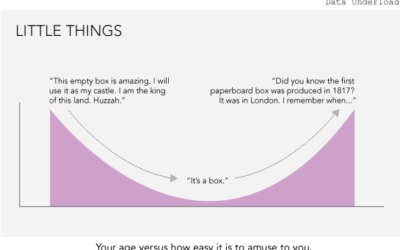
Data Underload #4 – Little Things


The Best Data Visualization Projects of 2011
What Facebook knows about you
Where are the biggest box office movies (not) streaming?
High-resolution maps of science
Backbone of the flavor network
Vehicles involved in fatal crashes
Cinemetrics creates a visual fingerprint for movies
Visualize This