Eric Katz reporting for Government Executive:
Staffing at the National Weather Service will…
News
Conferences, workshops, contests, and the like.
-
Nominee to lead NOAA prioritizes hiring people
-
Nate Silver on Disney’s 538
Nate Silver writes a few thoughts on the closing of FiveThirtyEight:
For more… -

FiveThirtyEight is shutting down completely
Disney is cutting news jobs, and FiveThirtyEight, which was absorbed by ABC News…
-

Census.gov is down
As of Friday, January 31, 2025 at 3:26pm PST, the U.S. Census Bureau…
-
Chartr was acquired by Sherwood Media
I missed this announcement at the end of last year:
Sherwood Media, LLC… -
An open-access journal for visualization research
In an effort to provide a more transparent process in visualization and interaction…
-
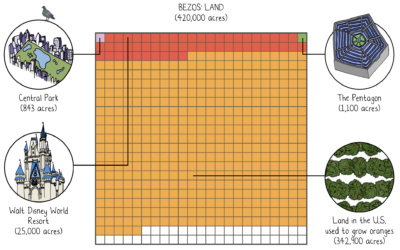
Mona Chalabi wins Pulitzer for data illustrations
Mona Chalabi, known around these parts for her illustrative approach to data journalism,…
-
FiveThirtyEight layoffs
Disney began more layoffs, and data-centric FiveThirtyEight, which is owned by Disney, was…
-
Unemployed data scientist
It seems a lot of data scientists have either left or were laid…
-
House raided of fired Florida data manager in charged of Covid-19 dashboard
Jeffrey Schweers for Tallahassee Democrat:
State police brandishing firearms Monday raided the Tallahassee… -
Seems relevant
Just looking back at the past eight or nine months of coronavirus posts…
-
Salesforce to acquire Tableau
From Tableau CEO Adam Selipsky:
In 2003, Tableau set out to pioneer self-service… -
Giorgia Lupi joins Pentagram
Giorgia Lupi, whose work exemplifies the use of data and visualization outside of…
-
DataKind receives $20M grant to expand on data for social good
DataKind, the organization known for helping others use data for social good, received…
-
Amanda Cox promoted to New York Times data editor
Amanda Cox is the new data editor for The New York Times:
As… -

xkcd and the needle of probability
xkcd referenced the ever-so-loved forecasting needle. I’m so not gonna look at it…
-
The Markup is a new journalism venture to examine technology through data
Founded by Sue Gardner, the former head of the Wikimedia Foundation and Julia…
-
Census Bureau budget cuts
The unexpected resignation of Census director John H. Thompson was likely related to…
-
Census director resigns
The U.S. Census director John H. Thompson resigned and will leave June 30.…
-
Participate in the Data Visualization Community Survey
Elijah Meeks is running a detailed survey about data visualization people to gain…
Recently for Members
Second Edition
 Visualize This: The FlowingData Guide to Design, Visualization, and Statistics (2nd Edition)
 Visualize This: The FlowingData Guide to Design, Visualization, and Statistics (2nd Edition)
New tools, refined process.
Browse by Chart Type See All →