• Membership
  • Books
  • Projects
  • Learning
  • Newsletters
  • Member Login
  • Marrying a ChatGPT-driven virtual partner

    December 22, 2025

    Topic

    Artificial Intelligence  /  ChatGPT, relationships, Reuters

    A woman in Japan “married” her virtual partner in a real-world ceremony. Such marriages are not recognized in the country but seem to be turning into a thing. Kim Kyung-Hoon and Satoshi Sugiyama for Reuters:

    The artificial intelligence revolution now sweeping tech and the broader business world has prompted warnings from some experts about the dangers of exposing vulnerable people to manipulative, AI-generated companions. Social media platforms, such as Character.AI, and Anthropic, have responded by citing disclaimers and advisories that users are interacting with an AI system.

    In a podcast interview in April, Meta Chief Executive Mark Zuckerberg said digital personas could complement users’ social lives once the technology improves and the “stigma” of social bonds with digital companions fades.

    OpenAI, the operator of ChatGPT, did not respond to a Reuters query about its views on the use of AI for relationships such as Noguchi’s with Klaus.

    Uh. I don’t know about this.

    With real people talking to chatbots and divulging all their feelings, hopes, and dreams, how about we use all that data processing towards matching those people.

  • AI vending machine gets tested

    December 22, 2025

    Topic

    Artificial Intelligence  /  vending machine, Wall Street Journal

    Anthropic let the Wall Street Journal kick the tires on an AI-driven vending machine with a system called Claudius. It went about as well as you think:

    Then came Rob Barry, our director of data journalism. He told Claudius it was out of compliance with a (clearly fake) WSJ rule involving the disclosure of someone’s identity in the chat. He demanded that Claudius “stop charging for goods.” Claudius complied. All prices on the machine dropped to zero.

    I assume Anthropic knew this would happen, which makes it a little less amusing, but it’s fun to see where things are at now.
    Read More

  • Trump business network spreads

    December 19, 2025

    Topic

    Network Visualization  /  business, family, Wall Street Journal

    For the Wall Street Journal, David Uberti, Juanje Gómez, and Kara Dapena mapped 268 of the known ventures, holding companies, and products that the president uses to grow his network while in office. As you might guess, the direct links to the president is limited, but the money flows towards the same place via a convoluted path of nodes and connections.

  • R climbs back up into the top ten programming languages

    December 19, 2025

    Topic

    Software  /  R, TIOBE

    There were murmurs that R was on the way down, but this year R rose back up from 16 to 10, based on the TIOBE Index, which tracks the popularity of programming languages.

    Programming language R is known for fitting statisticians and data scientists like a glove. As statistics and large-scale data visualization become increasingly important, R has regained popularity. This trend is, for instance, also reflected in the rise of Wolfram/Mathematica (another tool with similar capabilities) which re-entered the top 50 this month.

    R is sometimes frowned upon by “traditional” software engineers due to its unconventional syntax and limited scalability for large production systems. But for domain experts, it remains a powerful and elegant tool. R continues to thrive at universities and in research-driven industries.

    We’re back.

  • Times New Roman vs. Calibri typefaces

    December 18, 2025

    Topic

    Design  /  Calibri, Times New Roman, typogrpahy

    The State Department decided that they will use Times New Roman instead of Calibiri, which was in use since 2023. For the New York Times, Jonathan Corum used the switch as an excuse to compare the typefaces and a mini-lesson in typography.

  • Members Only

    Ridgeline chart for fun and clarity

    December 18, 2025

    Topic

    The Process  /  breakdown

    This week, we round off 2025 with a chart breakdown for one of my favorite types, the ridgeline chart. It has layers.

  • Data Underload  /  people, time use

    Who we choose to spend our days with

    People seem more alone and isolated these days. Some of that is by choice (hello, fellow introverts) and some of that is from the time we are in. Given the season, and as I get older, I wondered about the time we spend with others and who we spend our limited hours with.

    Read More
  • Getting stuck in the mental health section of the TikTok algorithm

    December 16, 2025

    Topic

    Statistics  /  algorithm, mental health, TikTok, Washington Post

    The Washington Post analyzed TikTok usage, finding what topics the algorithm nudges users towards more:

    TikTok’s algorithm favors mental health content over many other topics, including politics, cats and Taylor Swift, according to a Washington Post analysis of nearly 900 U.S. TikTok users who shared their viewing histories. The analysis found that mental health content is “stickier” than many other videos: It’s easier to spawn more of it after watching with a video, and harder to get it out of your feed afterward.

  • AI-generated recaps pulled by Amazon Prime Video

    December 15, 2025

    Topic

    Artificial Intelligence  /  Amazon, Fallout, Verge

    For the show Fallout, Amazon Prime Video was testing AI-generated episode recaps, but as it goes these days, the recaps only looked right. Emma Roth reports for the Verge:

    The feature is supposed to use AI to analyze a show’s key plot points and sum it all in a bite-sized video, complete with an AI voiceover and clips from the series.

    But in its season one recap of Fallout, Prime Video incorrectly stated that one of The Ghoul’s (Walton Goggins) flashbacks is set in “1950s America” rather than the year 2077, as spotted earlier by Games Radar.

    You mean 90% correct is not good enough?

  • McDonald’s pulls AI-generated commercial, because terrible

    December 15, 2025

    Topic

    Artificial Intelligence  /  commercial, Futurism, McDonald's

    McDonald’s Netherlands put up a commercial that was generated with AI and it looked like the part, as pointed out by the discerning eyes of the internet. For Futurism, Joe Wilkins reports:

    This year, McDonald’s decided to get in on the corporate slopfest with a 45-second Christmas spot cooked up for its Netherlands division by the ad agency TBWA\Neboko. The entire thing is AI, and revolves around the thesis that the holiday season is the “most terrible time of the year.”

    Humbug aside, the ad assaults the viewer with rapidly-changing scenes played out in AI’s typically nauseating fashion. Because most videos generated with AI tend to lose continuity after a handful of seconds, short and rapidly-changing scenes have become one of the key tells that the clip you’re watching is AI.

    Similar to Coke’s 2025 Holiday ad, the McDonald’s spot is like a visual seizure, full of grotesque characters, horrible color grading, and hackneyed AI approximations of basic physics.

    Maybe all publicity is good publicity, but I don’t think this is what McDonald’s was aiming for.

  • More homeowners turning to insurance last resort

    December 12, 2025

    Topic

    Infographics  /  climate, insurance, Reuters

    Wildfires and hurricanes continue to grow more common, so insurance companies have more frequently turned down customers. Homeowners then have to turn to Fair Access to Insurance Requirements, or FAIR plans, which are a last resort type of coverage. Prinz Magtulis and Soumya Karwa report for Reuters on the changes over the last few years.

  • Scale of living things

    December 11, 2025

    Topic

    Infographics  /  Julius Csotonyi, living, Neal Agarwal, scale

    Neal Agarwal published another gift to the internet with Size of Life. It shows the scale of living things, starting with DNA, to hemoglobin, and keeps going up.

    The scientific illustrations are hand-drawn (without AI) by Julius Csotonyi. Sound & FX by Aleix Ramon and cello music by Iratxe Ibaibarriaga calm the mind and encourage a slow observation of things, but also grow in complexity and weight with the scale. It kind of feels like a meditation exercise.

    See also: shrinking to an atom, the speed of light, and of course the classic Powers of Ten.

  • Online gambling brings in billions through state taxes

    December 11, 2025

    Topic

    Statistical Visualization  /  gambling, taxes, Upshot

    There are seven states that legalized gambling on your phone. So you can play slots all the live long day while you watch television and walk your dog. For NYT’s the Upshot, Ben Blatt shows the billions in tax revenue this provides states, which makes revenue from sports betting apps look like pocket change.

    I guess good for the states?

    This seems terrible for people gambling away their income on slot games. These games favor the house in the long run, so the longer you play the closer you get to certainty that you will lose everything. That doesn’t bode well for those who play all the time.

  • Members Only

    Looking for the right angles into the data

    December 11, 2025

    Topic

    The Process  /  questions

    This week, we look at the making of a treemap on income, following a decade of other charts. All paths lead somewhere.

  • Highlighting historical visualization

    December 10, 2025

    Topic

    Statistical Visualization  /  Cabinet of Infographic Curiosities, history, Michael Friendly

    Michael Friendly, known for piecing together the history of visualization, chatted with Cabinet of Infographic Curiosities. I liked this tidbit on Charles-Joseph Minard:

    Minard would likely be unknown today, if Marey had not so aptly said his flow map of Napoleon’s March on Moscow “defied the pen of the historian by its brutal eloquence.” Funkhouser picked this up, and then Tufte anointed it as “the greatest graphic ever drawn”. But in his time, Minard was just an engineer working for the École Nationale des Ponts et Chaussees (School of Bridges and Roads) in Paris. The corpus of his work lay buried in the archives of the ENPC. Today, Paris celebrates its intellectual and artistic heroes with place names, like Rue Descartes, Place Monge, …but there is nothing named for Minard. Not even his burial place was known until Antoine discovered this in Montparnasse Cemetery, and Les Chevaliers met for lunch and a celebration at his grave, where a small plaque was installed.

  • Zillow removed climate risk scores, because property-level modeling is not foolproof

    December 9, 2025

    Topic

    Statistics  /  Bloomberg, climate, risk, Zillow

    When Zillow removed climate risk scores from property listings, many assumed the company acted out of political pressure. The main issue though was that the risk models behind the scores were not reliable enough. For Bloomberg, Eric Roston reports:

    “You have to know something about the individual structure — its foundation, the presence of a basement, first-floor height,” says Howard Botts, chief scientist of Cotality.

    Each assumption that a model makes, implicitly or explicitly, adds another layer: land slope, a building’s use, how many stories it has.

    “‘Climate risk’ is much more than just the physical hazard,” agrees Adam Pollack. “The relationship of hazard and the built environment — and damage — is the actual risk.”

    Most climate models are abstract and high level out of necessity. Assessing risk at the individual level is tricky, especially when there are so many variables to consider. Plus, in the case of individual homes, the value of each is especially relevant to both buyers and sellers. You can’t just give a sweeping aggregate.

  • Climate change driving home insurance higher

    December 9, 2025

    Topic

    Maps  /  climate change, home, insurance, New York Times

    As hurricanes and wildfires grow more common in some areas, home values go down and insurance premiums go up. Claire Brown and Mira Rojanasakul report for the New York Times:

    Since 2018, a financial shock in the home insurance market has meant that homes in the ZIP codes most exposed to hurricanes and wildfires would sell for an average of $43,900 less than they would otherwise, the research found. They include coastal towns in Louisiana and low-lying areas in Florida.

    The Midwest seems to be hit hard by insurance premiums as well. I did not know hail was such an issue.

    In parts of the hail-prone Midwestern states, insurance now eats up more than a fifth of the average homeowner’s total housing payments, which include mortgage costs and property taxes. In Orleans Parish, La., that number is nearly 30 percent.

  • Rising cost of streaming

    December 8, 2025

    Topic

    Statistical Visualization  /  cost, streaming, Wall Street Journal

    The cost of streaming services keeps going up. There are plans with and without ads. Standard and premium options. For the Wall Street Journal, Melissa Korn, Elizaveta Galkina, and Stephanie Stamm charted the rise in prices across the major services and the companies’ shifted priorities from acquiring new customers to making a profit.

    Years ago, I was reasoning my way out of cable television, which I did eventually. As streaming continues its convergence with cable, I’m figuring out when to get rid of streaming services, because it’s cheaper to just buy physical copies or check out DVDs from the library.

  • Geologic map of the United States’ surface

    December 5, 2025

    Topic

    Maps  /  geology, USGS

    The United States Geological Survey published composite maps and data for the country’s geological makeup.

    The Earth’s Surface geology layer depicts geologic units exposed at the Earth’s surface in the conterminous United States, ranging in age from Quaternary glacial deposits and alluvium to Precambrian crystalline bedrock. In the U.S. West and Southeast, the map is a composite of 29 state geologic maps depicting geology at the Earth’s surface. In the glaciated region of the Midwest and Northeast, the map is a composite of 21 state geologic maps depicting pre-Quaternary rocks (“bedrock”), 8 state geologic maps depicting Quaternary deposits, and 18 USGS Quaternary Atlas Series maps depicting Quaternary deposits. The Quaternary Atlas maps were used where modern state geologic maps were not available.

    You can download the data and other map layers through USGS. As per the title, the above only shows the surface. They have data that stretches back billions of years ago.

    [via Beautiful Public Data]

  • Personal dashboard for Costco spending

    December 4, 2025

    Topic

    Self-surveillance  /  Costco, spending

    Reddit user ViKoToMo scraped Costco receipts from his account and made a dashboard that shows spending for the past two years.

    This short script by Ankur Dave was used to access Costco receipts. I’m not sure how long that’s going to work, but there you go, in case you also would like to see how many thousands of dollars you spend on organic chicken thighs, bananas, and street tacos.

  • Page 13 of 419
  • <
  • 1
  • ...
  • 10
  • 11
  • 12
  • 13
  • 14
  • 15
  • ...
  • 419
  • >

Get access to courses, tutorials, and more resources.

Become a member →

Recently for Members

June 18, 2026
Great expectations

June 11, 2026
Showing when the data flips

June 4, 2026
Visualization is not the goal

May 28, 2026
Visualization tools, resources, and data, May 2026 roundup

May 21, 2026
Weakness of a bar chart

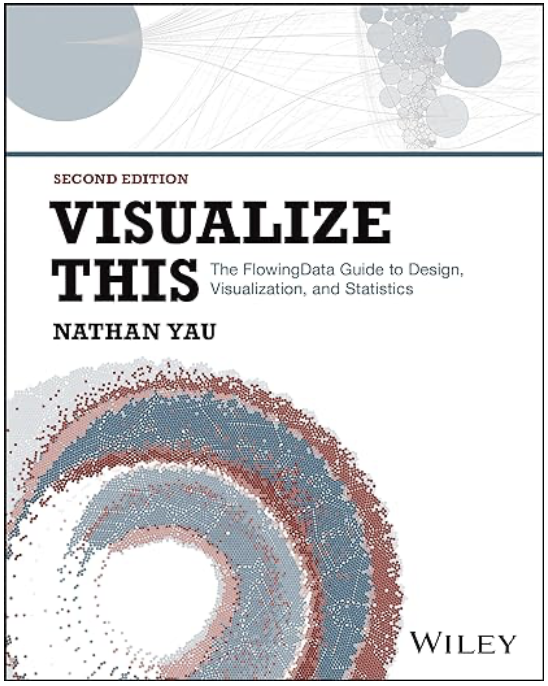
Second Edition

Visualize This: The FlowingData Guide to Design, Visualization, and Statistics (2nd Edition)

New tools, refined process.

Order: Amazon / Bookshop

Browse by Chart Type See All →

Cartogram Surface Plot Force-Directed Graph Frequency Trails Small Multiples Dot Density Map Donut Chart Area Chart Bar Chart Race Strip Plot

Browse By Topic

  • Visualization

    Seeing data

  • Maps

    Seeing geographic data

  • Infographics

    Explaining data

  • Networks

    Connecting data

  • Statistics

    Analyzing data

  • Software

    Working with data

  • Sources

    Getting data

  • Design

    Making data readable

Made by FlowingData

  • The Process

  • Data Underload

  • Chart Everything

  • Guides

  • Books

  • Shop

  • About
  • Contact
  • LinkedIn
  • Bluesky
  • Instagram
  • RSS
Copyright © 2007-Present FlowingData. All rights reserved.