Old graphics are awesome. We saw some from the 1930s already. These are even older.
Other than the maps, I don't exactly know what I'm looking at (knowing French would help too), but who cares? Mmm, hand-drawn goodness.
Continue Reading

Old graphics are awesome. We saw some from the 1930s already. These are even older.
Other than the maps, I don't exactly know what I'm looking at (knowing French would help too), but who cares? Mmm, hand-drawn goodness.
Continue Reading

All Things Considered discusses why music sounds worse than it did a few decades ago. Through a practice using compressors, the quiet parts of a song are made louder and the louder parts quieter so that the song as a whole sounds louder to your ear. The purpose: to make the song stand out when you hear it on the radio.
As a result, tracks have gotten louder over the years.
Continue Reading

Did we all see this? Phillip Niemeyer of Double Triple pictures the past ten years in this Op-Chart for The New York Times. Each row is a theme, and each column represents a year. For example, the champion rep for 2007 is Tiger Woods or collagen as the fad of 2002. Oh how times change.
Have a happy new year everyone. Be safe.
[via WeLoveDataVis]

In celebration of Information Aesthetics' birthday, Moritz Stefaner of Well-formed Data adapted his elastic lists concept to all five years of infosthetics posts. Each white-bordered rectangle represents a post, and colors within rectangles indicate post categories.
Select categories on the right, and the list updates to show related categories. Similarly, filter posts by year, author, and/or number of categories. Select a rectangle to draw up the actual post.
Go on, give it a try for yourself. Excellent work.
And then head over to infosthetics and wish it a happy birthday.

This interactive by Las Vegas Sun describes how in the long run, you're going to lose every single penny when you throw your hard-earned money into a slot machine. In the short-term though, it is possible to win. It's all probability. It's also why statisticians don't gamble. Nobody plays a game that he's practically guaranteed to lose, unless you're a masochist - or you're Al Pacino in that one horrible sports gambling movie with Matthew McConaughey.
One clarification on the snippet about payout percentage.
Here's what the graphic reads:
This is the ratio of money a player will get back to the amount of money he bets, which is programmed into the slot machine. If a machine has payout percentage of 90 percent, that means 90 percent of the money someone bets should statistically be won back. It means a player is not likely to lose 10 percent of the amount initially put into the machine, but rather 10 percent, on average, over time.
The wording is kind of confusing. To be more clear - over time, on average, you'd lose 10% of the money you put in per bet. This is an important note, because it's how casinos make money. For example, when you play Blackjack perfectly (sans card-counting), you'll lose on average 2% (or something like that) per hand, so play long enough, and you're going to lose all your money.
Imagine you have two buckets. One is filled with water. The other is empty. Transfer the water back and forth between the two buckets. Some of the water drips out during some of the transfers. Eventually, all the water is on the ground.
Ah yes, intro probability is fun. Play the virtual slot machine and do some learning for yourself.
[Thanks, Tyson]

You know when you go to another country and have no clue what the coins of the local currency are worth? I always end up with a giant handful of international coins, which doesn't go well when I try to spend a Euro in Canada. The US vending machine won't take my Canadian quarters either, or my pesos.
Continue Reading

I bet you wake up every morning wishing, "I wish there was an easier way to decide what cereal to eat! There's so so many choices that I get a headache just thinking about it." Well say goodbye to headaches. You wish is now reality. From Eating the Road is this flowchart to help you figure out life's greatest challenge: what cereal to eat.

David McCandless, author of The Visual MIscellaneum, delves into the usefulness of the H1N1 (swine flu) vaccine. There was quite a bit of research involved, as there's a crud load of material about H1N1 (naturally).
My wife's an ER doc, and she says it's not that big of a deal, seeing as way more people die from the flu, but here's full graphic. You can decide for yourself.

Interaction designer Christian Swinehart takes a careful look at the popular Choose Your Own Adventure books from the 1980s. We saw something like this before, but Swinehart takes it a step further.
Continue Reading

Imagine a world where data becomes the everyday, simply embedded in what you normally do. It's really not far off if you think about it. We use charts, graphs, and viz to make important decisions with investments, businesses, and to stay informed on the news, so why not use it in our own lives?
This infographic video, The Ambient Life, is a vision of that future by Freeband Communication and IIPIC. Watch for the dramatic twist in the middle. Just when you thought it was safe to go for a jog...
We've seen this type of projected future before (see here, here, and here). Still though, I never get tired of this stuff. It's going to happen... eventually.
[via datavisualization.ch via Cool Infographics]

David McCandless' The Visual Miscellaneum: A Colorful Guide to the World's Most Consequential Trivia hit the shelves last week (in the US). As I flipped through 320 pages of original graphics during my flight from New York to California, I thought to myself, "FlowingData readers are going to love this."
Continue Reading
From Herald Daily is this giganto view of land mass and population size by country:
I'm not sure how I feel about this one. I mean, it's basically population density, but it's separating population and area and then comparing the two. Then the population circles are sized based on 1,000 people per square mile which seems like it was more out of convenience than anything else.
What do you think - does this graphic work? Leave your thoughts in the comments below.
[via FlowingData Flickr Group]

The New York Yankees just won the World Series. I don't know much about baseball, but I do know that Mariano Rivera, the Yankee closer, has a lot to do with the success of his team. Whether you like it or not, Rivera dominates batters with just a 0.74 ERA over 88 post-season games.
The New York Times provides a batter-by-batter look at Rivera's pitching since 1995. He's pitched to 501 batters in the post-season. Only 14 runs have been scored off of him.

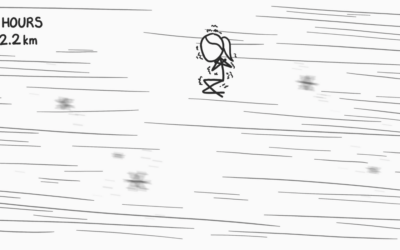
Popular nerd comic xckd takes a look at character interactions over time in Lord of the Rings, Star Wars, Jurassic Park, 12 Angry Men, and Primer. The horizontal axis is time and the vertical axis indicates which characters are together at any given time. The result is something that looks like famed Minard graphic. Well, sort of. And of course it's all hand drawn, which adds to the nerd-ish charm.
[Thanks, Wesley & Dave & Everyone else]

We all know (or at least should know) about the pay gap between men and women in the workplace. This graphic from Shakeup Media was made to highlight that gap by comparing two cities in the UK at opposite ends of the spectrum. In one city women are paid way less than men while in the other, women are actually paid a tad more.
The aesthetic is nice and the subject matter is important. I also like the use of the Easy Tooltip jQuery plugin.
I just wish there was more focus on the actual pay gap. Instead it was more of an exercise in displaying demographics of two cities, where each section is separate from the other. Some annotation in the tooltips about the cities' differing demographics would have tied things together nicely.
[Thanks, Ryan]