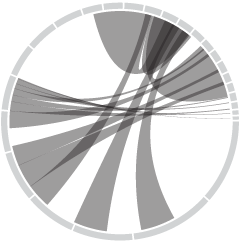
Here is what happened in January.

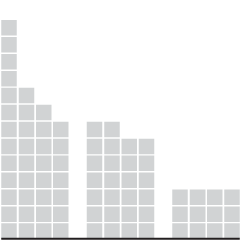
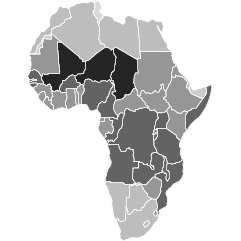
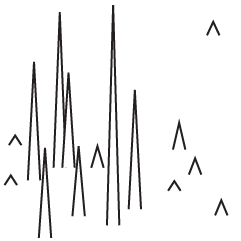
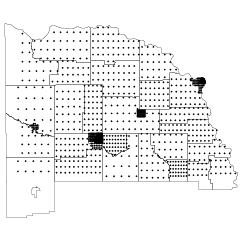
Most states gained population, but a few saw more people move out than move in, based on the newest estimates from the Census Bureau.
Here is what happened in January.

If you’re a fan of SimCity, then you’ll appreciate IsoCity, an open source simulation game. The premise is the same. Start with land, build infrastructure, and try to maintain a thriving city. From the GitHub:
IsoCity is a open-source isometric city-building simulation game built with Next.js, TypeScript, and Tailwind CSS. It leverages the HTML5 Canvas API for high-performance rendering of isometric graphics, featuring complex systems for economic simulation, trains, planes, seaplanes, helicopters, cars, pedestrians, and more.
I’ve never been big into video games, but I spent many hours in high school playing SimCity 2000, building up my city of the future. I installed the game from a single floppy disk on the family 486. My city was eventually sustainable with those robot-looking Energy Domes, and I thought our own future looked bright. If I could do it in the game, then surely we could do it in real life.
IsoCity, which runs in the browser, is not as expansive, but it’s a fun throwback.
Roblox is a game mostly for kids. In an effort to make the game safer, the Roblox company integrated an AI-based age verification system. For Wired, David Gilbert, describes a mess of a system.
But players are already in revolt because they can no longer chat to their friends, developers are demanding Roblox roll back the update, and crucially, experts say that not only is the AI mis-aging young players as adults and vice versa, the system does little to help address the problem it was designed to tackle: the flood of predators using the platform to groom young children.
In fact, WIRED has found multiple examples of people advertising age-verified accounts for minors as young as 9 years old on eBay for as little as $4.
I don’t think my kids will be playing Roblox much any time soon.

The administration cut science funding, withheld grants, and eliminated jobs in research areas that did not align. Nature, with visualization by Kim Albrecht, show the total impact so far.
A treemap with a broken glass metaphor leads the article. I’m into it. But you can see the sudden drop in staffing for the government science agencies in the chart above, which says most of what you need to know.

The National Weather Service has current and historical snowfall data in various file formats and segments of time. The map could be improved, but the data is easy to access to analyze and make your own maps. Just select the file format from the menu and download.
I hope you east coasters are staying warm. Remember to pace yourself with the snow shoveling.

In 2023, most of the family’s wealth, about 79% of it, was tied to real estate. These days, a growing portion belongs to cryptocurrency endeavors. For Bloomberg, Annie Massa and Tom Maloney report on the shifting assets.
Despite the new projects, the family’s overall net worth looks remarkably similar to last year at $6.8 billion, according to the Bloomberg Billionaires Index. Even as crypto made the Trumps richer, the gains were offset by the plunging value of his social media company, Trump Media & Technology Group Corp. Its shares are down 66% over the past 12 months, despite efforts to diversify into finance, crypto and most recently, fusion power.
Circular voronoi treemaps, scaled by total assets, show the composition. There was an initial swell in the total and then mostly flat.

From the New York Times editorial board, an animated big pile of money:
A review by the editorial board relying on analyses from news organizations shows that Mr. Trump has used the office of the presidency to make at least $1.4 billion. We know this number to be an underestimate because some of his profits remain hidden from public view. And they continue to grow.
Money rains down, each stack representing the median household income in the United States. You scroll, and more money falls on to the pile. The pile gets too big for the screen, so the view zooms out. The pile grows.

We focus on the bad, because that’s where it can and will get better. It’s good to remind ourselves sometimes.

There is a dashboard for pizza places around the Pentagon.
The Pentagon Pizza Index (PizzINT) is a real-time dashboard that monitors pizza shop popularity around the Pentagon area in Arlington, Virginia. Based on the famous “Pentagon Pizza Theory,” this project tracks potential correlations between late-night pizza orders and military activity.
Originally a Cold War-era observation that pizza deliveries to government buildings might indicate crisis activity, the theory gained internet fame during recent geopolitical events. Our dashboard brings this concept into the digital age using publicly available data.
I’m torn because this is centered around crypto and memecoins, but a good dashboard built for the right audience and purpose is a good dashboard.

For the New York Times, Chris Buckley, Agnes Chang, and Amy Chang Chien analyzed and mapped the location of 1,400 ships that suddenly left their fishing locations and home ports to fill an area 200 miles long. Then they just stayed in place for 30 hours. In all likelihood it was a state-directed military exercise at a large scale.
The lead animation on the article reminds of the study on ants building a bridge across an empty space.

If you know who you’re talking to, you can design based on what they know, what they’re looking for, and what you want to show.

The Washington Post used word usage in earnings calls to gauge how companies view the state of the economy. Comparing the third quarter to the second, there was more emphasis on growth and less on tariffs and uncertainty. Although that seems like that might switch next quarter, given current proclamations of the administration.
I like these word-based views that add flavor to the article:

The slope of the highlighted words represent the change in usage between quarters.

He hear global warming and it seems like a monolithic thing that is far away from where we live. However, you can see and feel the changes locally. For the New York Times, Harry Stevens and Eric Niiler show the change based on your selected region.
As is usually case with temperature data, there is noise between individual points, but an overall trend points upwards.

You probably don’t need me to tell you this, but recent data suggests that the planet is still getting hotter. The Economist shows the shifts with a heatmap:
The past 11 years are the warmest since records began, with the past three top of the leader-board. Hottest of the lot was 2024, which coincided with a strong Niño—a pattern of winds and ocean currents that nudges the thermometer upwards—combined with a peak of the 11-year solar cycle when the sun shines brightest. But in 2025 El Niño tailed off, to be replaced by its opposite pattern, La Niña, and the sun—only a minor part of the story in any case—began to dim. That 2025 was cooler than its predecessor was thus no surprise. But as La Niña years go, it was sweltering: the hottest yet.
With a surprise to nobody, Kyle Cheney for Politico:
Two members of Elon Musk’s DOGE team working at the Social Security Administration were secretly in touch with an advocacy group seeking to “overturn election results in certain states,” and one signed an agreement that may have involved using Social Security data to match state voter rolls, the Justice Department revealed in newly disclosed court papers.
Elizabeth Shapiro, a top Justice Department official, said SSA referred both DOGE employees for potential violations of the Hatch Act, which bars government employees from using their official positions for political purposes.
For the Wall Street Journal, Tom Fairless reports on research from the Kiel Institute for the World Economy:
By analyzing $4 trillion of shipments between January 2024 and November 2025, the Kiel Institute researchers found that foreign exporters absorbed only about 4% of the burden of last year’s U.S. tariff increases by lowering their prices, while American consumers and importers absorbed 96%.
The tariffs had a significant effect on trade volumes: Facing higher U.S. tariffs, Indian exporters maintained their prices but reduced the volume of shipments to the U.S. by 18%-24% relative to the European Union, Canada and Australia, the report found.
Rather than acting as a tax on foreign producers, the tariffs functioned as a consumption tax on Americans, the report said.
Not ideal.
Find the full Kiel report here.

In his song “We Didn’t Start the Fire”, Billy Joel makes 119 historical references from his life at the time. Of those, 57 of them are people, and as the internet likes to remind us, the number of those on the list who are still alive approaches zero with time.
With the passing of Brigitte Bardot at the end of 2025, the count is down to three. These are the timelines of everyone on the list.

In some counties, vaccination rates increased after the pandemic, which got them past the recommended level of protection. Many more counties decreased their rates though. The Washington Post made an interactive map to see where your county stands.
I’m into the lede map that makes the decreasing counties fall into the depths below the rest of the country.
Bandcamp’s mission is to help spread the healing power of music by building a community where artists thrive through the direct support of their fans. We believe that the human connection found through music is a vital part of our society and culture, and that music is much more than a product to be consumed. It’s the result of a human cultural dialog stretching back before the written word.
Similarly, musicians are more than mere producers of sound. They are vital members of our communities, our culture, and our social fabric. Bandcamp was built to directly connect artists and their fans, and to make it easy for fans to support artists equitably so that they can keep making music.
Today we are fortifying our mission by articulating our policy on generative AI, so that musicians can keep making music, and so that fans have confidence that the music they find on Bandcamp was created by humans.
I hope this works. Of course, the hard part is that it’s going to get more difficult for fans to know if a song was made by a human.
 Visualize This: The FlowingData Guide to Design, Visualization, and Statistics (2nd Edition)
New tools, refined process.