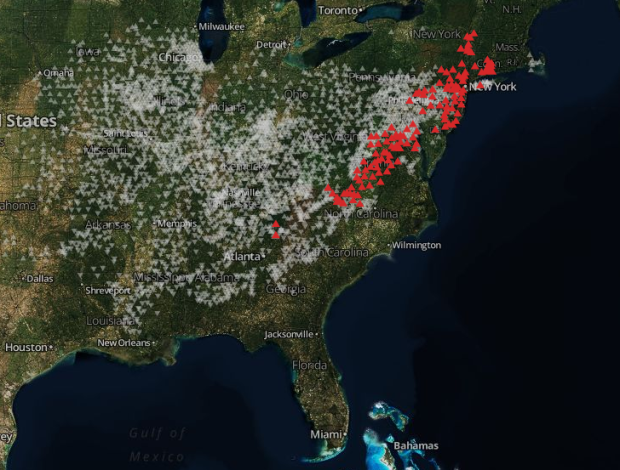
This is my first time hearing about this, probably because it only happens every 17 years. After 17 years of development in the ground (getting nourishment from tree roots), the Cicada insects are starting to swarm on the east coast. Hundreds of millions of them mate, make a lot of noise, and then die. Adam Becker and Peter Aldhous for New Scientist mapped data maintained by John Cooley and Chris Simon from the University of Connecticut to show the cycles of the Cicada.
There are 17-year broods, which is what’s happening now, and there are 13-year broods, with the next one expected next year in Louisiana.
Click the play button on the top right to see the various broods appear over time, and be sure to turn on the audio (in the left panel) for added flavor. [Thanks, Peter]





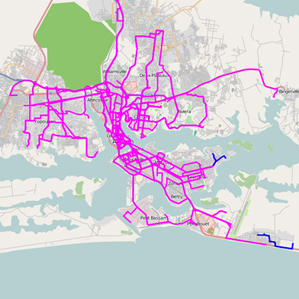 In parts of the world where there are few smartphones and GPS-enabled devices, transportation architecture has to be designed based on less granular resources, such as surveys, which can result in rough estimates.

 Ben Orlin likes math and teaching. He’s bad at drawing. He has a blog on
 Visualize This: The FlowingData Guide to Design, Visualization, and Statistics (2nd Edition)