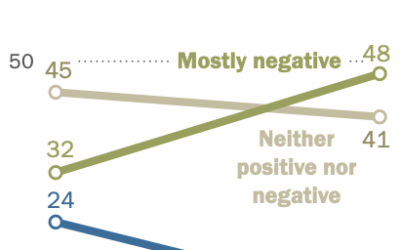
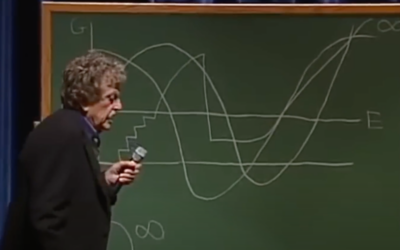
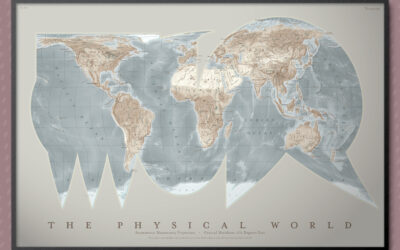
Each year, Oscar speeches seem to follow a similar format, with familiar names and groups sputtered in 30 seconds. For her master's project, Thank the Academy, digital media student Rebecca Rolfe explored these patterns.
Continue Reading
Each year, Oscar speeches seem to follow a similar format, with familiar names and groups sputtered in 30 seconds. For her master's project, Thank the Academy, digital media student Rebecca Rolfe explored these patterns.
Continue Reading
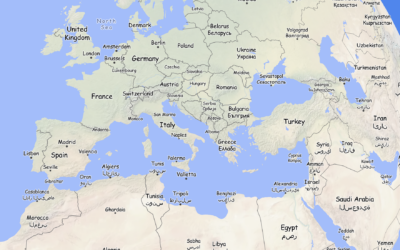
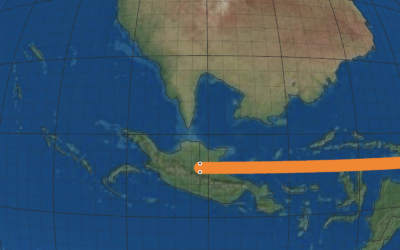
In a collaboration between PEER 1 Hosting, Steamclock Software, and Jeff Johnston, the Map of the Internet app provides a picture of what the physical Internet looks like.
Continue Reading
It can be tricky picking the right seat at a dinner party. So much depends on how many people there are and what shape the table is. Luckily, Alex Cornell provides a guide on where to sit and when to arrive to get the best seat of the night. The 4-person circle is your best bet.
This is the ideal setup. You are safe sitting in any seat. Regardless how interesting everyone is, you pretty much can’t go wrong. Note: as the diameter of the table increases, so too does the importance that you sit adjacent to someone you like.
Sorry for always sitting at the lonely end seat in the 7-person rectangle. [via kottke]
In 2007, Martin Wattenberg and Fernanda Viégas created the word tree, a search tool for unstructured text. You enter the text, pick a word or phrase, and you can see how other words and phrases branch from the root. Data visualization developer Jason Davies rephrased the visualization in JavaScript, and you can enter a URL or a Twitter username (or enter your own text like with the original). There's also a nice sidebar that makes it easier to browse through the text.
So for example, the above is a word tree for The Cat in the Hat, and you can see what branches from Thing One and Thing Two. The phrase "and Thing Two" often follows "Thing One" as do exclamation points. The reverse feature comes in handy for text like Steve Jobs' commencement speech.
When we build models of the world, we often think of it broken down into pieces, such as cities, counties, and countries. In their newly funded project The City of 7 Billion, architects Joyce Hsiang and Bimal Mendis aim to model the world as one city, to study the impact of population growth on the environment and natural resources on a larger scale.
Every corner of the planet, they argue, is "urban" in some sense, touched by farming that feeds cities, pollution that comes out of them, industrialization that has made urban centers what they are today. So why not think of the world as a single urban entity?
Hsiang and Mendis don't yet know exactly what this will look like (that is the question, Mendis says). But they are planning to seed their geo-spatial model with worldwide data on population growth, economic and social indicators, topography, ecology and more. Ultimately, they hope, other researchers will be able to use the open-source platform for research on development patterns or air quality; the public will be able to use it to grasp the implications of building in a flood plain or implementing an energy policy; and architects will be able to use it to view the world as if it were a single project site.
Along with a slew of other challenges I am sure, one of the big ones is finding comparable data at high granularity. Large cities tend to track (and hopefully release) data about what's going, but once you step out of the major areas, data grows scarce.
They started with population, which was transformed into the physical installation above.
These days it's relatively easy to figure out connections between people via email, Twitter, Facebook, etc. However, it's harder to decipher relationships between people in the 17th century. Researchers at Carnegie Mellon and Georgetown University aim to figure that out in the Six Degrees of Francis Bacon.
Historians and literary critics have long studied the way that early modern people associated with each other and participated in various kinds of formal and informal groups. Yet their scholarship, published in countless books and articles, is scattered and unsynthesized. By data-mining existing scholarship that describes relationships between early modern persons, documents, and institutions, we have created a unified, systematized representation of the way people in early modern England were connected.
The United States Census Bureau just released county-level commute estimates for 2011, based on the American Community Survey (that thing so many people seem to be against).
About 8.1 percent of U.S. workers have commutes of 60 minutes or longer, 4.3 percent work from home, and nearly 600,000 full-time workers had "megacommutes" of at least 90 minutes and 50 miles. The average one-way daily commute for workers across the country is 25.5 minutes, and one in four commuters leave their county to work.
The Bureau graphic isn't very good [PDF], but WNYC plugged the data into a map, which is a lot more informative.
There's also a link to download the data on the bottom left of the WNYC map in CSV format, in case you want to try your hand at making a choropleth map. Or you can grab some flow data from the Census Bureau.
Who's going to be the next pope? I know all of you are sitting on the edge of your seats. Luckily, an analytical research manager who goes by the name AJ hacked together a pope tracker.
Despite not being Catholic, the papal election fascinates me. Not sure if it’s the old rituals, the world-wide interest, or simply the fact that the Catholic Church has left a huge mark on history.
There’s no way I know enough about the inner workings of the Catholic Church to have any idea on who the next Pope may be.
Since domain knowledge is out, the next best option?
Follow the money!
He's scraping odds of possible candidates becoming pope from a betting site, and the above shows the numbers over time. The odds were bumpy at first, but there seems to be some convergence, and as of this writing, Cardinal Peter Turkson from Ghana is the heavy favorite. [via Revolutions]
I'm not into video games, and my experience has been near zero since high school, but I'm excited about SimCity 2013 coming out tomorrow. I think my excitement comes from one part nostalgia and one part GlassBox — the game engine that drives the simulations of the city you build and its citizens:
All the glowing reviews probably have something to do with interest, too. But that memory of installing SimCity 2000 from two floppy disks in my 486 totally brings back happy thoughts.
Apparently, the game makers were inspired by Google Maps and information graphics to display the data generated during gameplay. I hope Maxis releases some of that data. It could be fun to compare SimCity demographics to the real world. Then again, who's going to have time to look at the data, when we'll be too busy building arcologies?
Add another way to make state-level choropleth maps. Stately, a project by Intridea, allows you to approach state mapping in the browser like you would a font.
Stately is a symbol font that makes it easy to create a map of the United States using only HTML and CSS. Each state can be styled independently with CSS for making simple visualizations. And since it's a font, it scales bigger and smaller while staying sharp as a tack.
The process is fairly straightforward: Link to the Stately stylesheet, add some HTML markup (an unordered list of states) to your page, and then use CSS to color each state. Boom, you've got yourself a map.
In a follow-up to their map on most used languages in London, James Cheshire and Ed Manley, along with John Barratt, mapped the most commonly used languages in New York, based on the ones used on Twitter.
English (in grey above) is by far the most popular with Spanish (in blue above) taking the top spot amongst the other language groups. Portuguese and Japanese take third and fourth respectively. Midtown Manhattan and JFK International Airport have, perhaps unsurprisingly, the most linguistically diverse tweets whilst specific languages shine through in places such as Brighton Beach (Russian), the Bronx (Spanish) and towards Newark (Portuguese). You can also spot international clusters on Liberty Island and Ellis Island and if you look carefully the tracks of ferry boats between them.
With Pope Benedict XVI's resignation, 116 cardinals from various regions have to come a consensus on who will be next. Amanda Cox and Graham Roberts for The New York Times wondered what a composite of all the cardinals might look like, which looks exactly how you might expect the average to look.
On Craigslist there's a section in the personals for "missed connections" which lets people post missed chances at love with the (slim) hopes that the person he or she saw sees the random post on Craiglist. They usually start off like, "I saw you in that place, and you were..." Dorothy Gambrell mapped the most frequent location for each state.
In California, there's apparently a lot of eyeballing at 24 Hour Fitness, and in New York it's the subway, which shouldn't be surprising. I like how bars are most mentioned in North Dakota and Wisconsin, which matches up with the bars versus grocery stores map from a couple of years ago.
Shan Carter, Amanda Cox, and Mike Bostock for The New York Times, analyzed movie trailers for five best picture nominees. The horizontal axis represents time elapsed during a trailer, and the vertical axis represents when that clip occurred during the movie. The above is for Silver Linings Playbook:
"Silver Linings Playbook" follows the standard model for trailers, according to Bill Woolery, a trailer specialist in Los Angeles who once worked on trailers for movies like "The Usual Suspects" and "E.T. the Extra-Terrestrial." While introducing the movie’s story and its characters, the trailer largely follows the order of the film itself.
Because the order of the trailer is pretty much the order of the movie, you see a straight line with a downward slope most of the way. On the other hand, the Lincoln trailer jumps around showing a zig-zag pattern.
In addition to the charts, the healthy dose of annotation provides interesting tidbits on the reasoning behind pace and scene choice.
How big is the Moon, really? Reddit user boredboarder8 provided some perspective with this image of the Moon with an overlaid United States. It's roughly estimated (and others would be better at commenting on the accuracy better than me), but after some back-of-napkin math it seems about right. The area of the United States, not including Alaska, is a little over 20 percent of the Moon's surface area. [via io9]
From NOAA, an animation showing a wave of cold during the Martin Luther King Jr. holiday weekend last month:
A drop in the jet stream sent temperatures across the United States plummeting over the Martin Luther King Jr Holiday weekend. The pronounced change in temperatures can be seen in this weather data from NOAA/NCEP's Real-Time Mesoscale Analysis. Areas colored blue are below freezing. The diurnal cycle of heating and cooling can be seen over time, but the pattern is clear: much of the U.S. is pretty cold.
While you're at it, you might as well check out other videos on the NOAA Visualizations YouTube channel. Some good stuff.
Neil Freeman reimagined state boundary lines based on population. He started with an algorithm and the fifty largest cities, considered proximity, urban area, and commuting patterns, and then hand-tweaked boundary lines and shapes. The state names are mostly centered around geographic features (although I would have opted for ones based on dating profiles).
"Keep in mind that this is an art project, not a serious proposal, so take it easy with the emails about the sacred soil of Texas." [via kottke | Thanks, Mickey]
A handful of experts weighed in on visualization as a spectrum rather than an unyielding tool.
The panelists emphasized repeatedly that data visualization exists on a spectrum. On one side are the pieces that are purely aesthetic and emotional, and on the other, the focus is purely on conveying the insights found in the data. Tom Carden, a data visualization engineer at Square, asks himself if the goal is to grab attention for a new idea, or to build a tool that will be used on an ongoing basis: "Tools need to be actionable, auditable, and they have to stand up to scrutiny long-term." Tools should be able to accommodate new data, he said, and should grow with companies in such a way that people aren’t surprised by a difference between this week and last week.
From the other side of the spectrum are different types of insight that can be emotional, reflective, or just darn funny. This is equally important to analytic insight that you get from tools, and they feed in to each other providing a more realistic view of what data really represents.
Some illustrated notes from the panel:
With the State of the Union address tonight, The Guardian plotted the Flesh-Kincaid grade levels for past addresses. Each circle represents a state of the union and is sized by the number of words used. Color is used to provide separation between presidents. For example, Obama's state of the union last year was around the eighth-grade level, and in contrast, James Madison's 1815 address had a reading level of 25.3.
My guess is this has to do with changes in how we write and talk more than anything else. Lee Drutman and Dan Drinkard for the Sunlight Foundation ran a more rigorous analysis on Congressional records back in May, and the declining trend is similar.
Viviana Ferro, Ilaria Pagin, and Elisa Zamarian had a look at all of Zeus's relationships according to many authors over the years. Each person on the inside of a circle represents a lover, and the colored branches connect to children. Start with Zeus, the largest black dot near the middle, and then work your way out.