Online Applications

  • Google Visualization API Opens Up

    Google Visualization API Opens Up

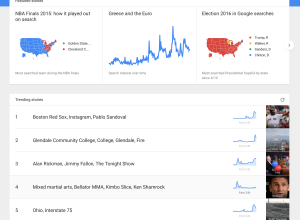
    When Google first launched their visualization API, you could only use data that was in Google spreadsheets, which was pretty limiting. Yesterday, Google opened this up, and you can now hook in data from wherever you want. What does that mean? It means that developers now have access to all the visualization API offerings like before, but it's now a lot easier to hook visualization into data applications.

    Headed for Googley Waters

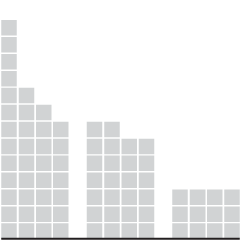
    It also means we're about to see a boom in web applications that look very Googley. Motion charts (above) are going to spread like wildfire and ugly gauges will grace us with their presence. It'll be similar to the Google Maps craze, but not quite as rampant. In a couple months from now, I will have a long list of online places that use the Google visualization API. It's going to be interesting where online visualization goes from here.

    Going back to my original question, to what extent do you think the now-open Google Visualization API will affect visualization on the Web?

    [via ReadWriteWeb]

  • Compare Media Coverage of Presidential Candiates with Everymoment Now

    Compare Media Coverage of Presidential Candiates with Everymoment Now

    I keep stumbling on rants about how media coverage of presidential candidates is uneven, biased, etc. Everymoment Now provides a way to see what's going on with the election from the coverage (and sort of statistical) standpoint. From Craig, the developer of Everymoment:

    In order to limit the scope I've decided to keep the focus (for now) on the 2008 US general election. It's a timely, pertinent and, I believe, quite fascinating topic to study under this sort of data visualization lens. When all is said and done, you'll be able to use this site to look back over the last 100 days leading up to the election and see how the shifts between candidates played out in the media. I think we all have a sense that things may get pretty nasty in the coming weeks. I feel that having a bird's eye, hindsight view of how things went down, which stories the media focused on and how that ultimately influenced the final outcome will be an invaluable resource.

    Check out spikes in coverage of the candidates or even events and locations. Lots of sparklines and lots of bar graphs very nicely organized.
    Continue Reading

  • See the World Through SimCity’s Eyes – One Up On OnionMap

    September 10, 2008 to Mapping, Online Applications  •  Share on Twitter  •  Comments (7)

    See the World Through SimCity’s Eyes – One Up On OnionMap

    Michael comments, "Onionmap is nothing when compared to this Chinese site...They've practically mapped out the entire Shanghai (and quite a few other China cities) in a SimCity-like fashion! Amazing stuff!" He's completely right. Edushi maps Shanghai with great detail. While OnionMap looks like Google Maps with SimCity sprinkles, Edushi is just straight up SimCity.

    Unfortunately my three years of Chinese classes in high school did me no good, and I don't understand a thing on the site. Maybe someone can translate and let us know what Edushi is all about. Chinese CitySearch?

    [Thanks, Michael]

  • Keep Track of Presidential Race from Many Perspectives – perspctv

    August 28, 2008 to Online Applications  •  Share on Twitter  •  Comments (3)

    Keep Track of Presidential Race from Many Perspectives – perspctv

    Keep track of what's getting reported about the presidential race in somewhat realtime with perspctv. It's a nicely done news dasboard that updates on its own showing updates from CNN, Twitter, and the Blogosphere. It also shows poll results, predictions, daily reach, and search volume.

    They've got charts (above); they've got maps:

    they've got timelines:

    and they've got widgets:

    In essence, it's a news aggregater, but it's a really good one and a great dashboard for you election junkies.

    [Thanks, Iman]

  • Tell Stories With Interactive Timelines from Dipity

    August 18, 2008 to Online Applications, Visualization  •  Share on Twitter  •  Comments (2)

    Tell Stories With Interactive Timelines from Dipity

    Timelines, much like calendars, can be used to show changes over time in a straightforward way. When you have a bunch of events that occurred at certain times, mark them on a timeline, and you quickly get a sense of what's going on. Take the timeline of 10 largest data breaches for example. You see breaches get more dense as time goes by.

    Wrap this idea into web application form, and you get Dippity. There have been similar timeline applications, but Dippity does it a bit better with a primary focus on telling stories with timelines and a good interface. Zoom in, zoom out, drag, and get alternative views as flipbook, list, and map.

    Below is a little bit of context to my gas price chart. Check out the full version for a better idea of what Dippity offers. Continue Reading

  • Many Eyes Adds Wordle to its Extensive Visualization Toolbox

    August 13, 2008 to Data Art, Online Applications  •  Share on Twitter  •  Comments (6)

    Many Eyes Adds Wordle to its Extensive Visualization Toolbox

    I'm sure you've seen Wordle by now, which puts an artistic spin on the traditional tag cloud. An application by Jonathan Feinberg, Wordle lets you put any text or RSS/atom feed in as input and get a cloud of words sized by frequency and arranged every which way. Above is a Wordle cloud of the current FlowingData feed.

    Many Eyes recently added Feinberg's visualization to their slew of other visualization tools.

    Wordle marks a departure from the more analytical visualizations on Many Eyes. Why bring a self-described “toy” to a site for social data analysis? People have reported finding value beyond entertainment in creating these word clouds. Teachers have used Wordles in classrooms as conversation catalysts; others have created them to express their identities, and scholars have used them to visualize the output of statistical explorations of texts.

    No doubt Many Eyes, with Martin Wattenberg and Fernanda Viégas (who know a thing or two about design) at the helm, recognizes that data visualization isn't always about analytics and exactness. Sometimes visualization is just about getting people to think.

  • Google Releases Insights for Search – India Likes Data

    August 6, 2008 to Online Applications  •  Share on Twitter  •  Comments (10)

    Google Releases Insights for Search – India Likes Data

    Google announced Insights for Search yesterday. Think Google Trends but with more information and more useful. Type in some search terms and get the rundown on interest over time based on search volume, regional interest, and related searches. It's geared towards advertisers using AdWords, but it can still be interesting to outsiders.

    For example, I put in a search for data + visualization + design + statistics and got the above. Apparently interest for all of those subjects (i.e. FlowingData) is on the decline and India sure loves its data. I'm packing my bags to India as we speak.

    [via TechCrunch]

  • Discover, Share, Publish, Distribute, and Subscribe to Data With blist

    May 12, 2008 to Online Applications  •  Share on Twitter  •  Comments (4)

    blist logoToday, Kevin Merritt, founder and CEO of blist, provides some background on putting data in the hands of mainstream users.

    blist is not a company of modest ambitions. We want to democratize working with data much as PowerPoint and Visio have empowered mainstream users to create their own presentations and diagrams. Before these breakthroughs in innovation, mainstream users sketched free hand and asked professionals in central resource pools (art departments and engineering departments) to turn drawings into foil transparencies and blueprints.
    Continue Reading

  • Your Notes, Snapshots, and Memories Accessible From Everywhere – Evernote

    April 2, 2008 to Online Applications  •  Share on Twitter  •  Comments (11)

    Your Notes, Snapshots, and Memories Accessible From Everywhere – Evernote

    I just signed up for an EverNote account, which lets you store all of your notes online from all of your devices - tablet, paper, mobile phone, laptop, PDA.
    Continue Reading

  • Facebook Security Upgrade Rendered Useless – Private Photos Leaked

    March 25, 2008 to Online Applications  •  Share on Twitter  •  Comments (10)

    Leaky Faucet

    Just when you thought it was safe to upload those photos from that wild Friday night to Facebook, this happens:

    A security lapse made it possible for unwelcome strangers to peruse personal photos posted on Facebook Inc.'s popular online hangout, circumventing a recent upgrade to the Web site's privacy controls.

    The dumbest part is how easy it has been all this time to find private photos. All it took was a modified URL with a photo ID to "hack" into Paris Hilton, Mark Zuckerberg, or anyone else's private albums. I don't know the whole story, but given Facebook's excellent reputation, you'd think that they would know better. The security hole has been plugged for now, and I am sure the Facebook group is working hard to make sure there are no other leaky areas.

    This leak probably couldn't have been more poorly timed for Facebook with the release of their new security measures as well as MySpace's not so distant and a bit too familiar photo breach.

    This really makes you wonder - what's next?

    Photo by Meredith Farmer

    [via ReadWriteWeb]

  • toolbox-thumb

    Putting Analysis Online With StatCrunch and Covariable [Review]

    Are online statistical tools sufficient to analyze our complex datasets?
  • Stamen Design Puts Out Another Good One in Digg Pics

    January 8, 2008 to Online Applications  •  Share on Twitter  •  Comments (1)

    digg-pics

    In the usual fashion that we've come to expect from Stamen Design, Digg Pics shows us what pictures are being dugg as well as provides an opportunity to discover new pictures. As with its Digg Labs siblings, Digg Pics offers three streams -- popular, newly submitted, and all activity.

    I always like to read posts that discuss the experimental phases and how a viz came to whatever it is; it's kind of like when you know the history of a piece of art, you can appreciate it more. Eric goes into the design process at the Stamen blog. There's screenshots of Stamen's experimental layouts, and from what I see on Digg, I'd say everything came together quite nicely.

    The picture streams are split up into Digg categories where the number of times a picture is repeated represents the number of times the picture was recently dugg. The display is clean and smooth, and of course the interaction is quite nice (and useful).

    Another good one, Stamen!

  • YouTube Releases Visualization for Related Videos

    December 18, 2007 to Online Applications  •  Share on Twitter  •  Add Comment

    youtube-viz

    YouTube (or should I say Google), released their visualization for related videos. It's essentially a ball and stick graph without the sticks. The above is a screenshot of the videos related to Marty McFly playing Johnny B. Goode in Back to the Future, the greatest movie of all time.

    Some of the video bubbles that circle around the Marty clip are the same as those in the "Related Videos" section of the usual page while others are not. Place the cursor over a bubble for about two seconds, and related videos for the one you have your mouse over will bubble up.

    I'm not sure if the distance between the bubbles have to do with similarity level. So far it seems not, because I've refreshed the Marty visualization a few times and the bubbles' initial positions have always been different.

    Continue Reading

  • Many Eyes Has Embeddable Visualization

    December 13, 2007 to Online Applications  •  Share on Twitter  •  Add Comment

    You used to only be able to get a small thumbnail to "share" the visualization you found or created on Many Eyes (well, outside of taking screenshots and emailing), but Many Eyes just announced the embed feature. In the same way you can embed YouTube videos, you can embed Many Eyes visualizations. This is a really big step forward, because users can share what they've found or seen more easily and as a result, it's more likely others will become drawn in. You know, it's that whole viral marketing thing.

    Just one weird thing. I had to change the single quotes in the copy and paste snippet to double quotes for the embedding to work, because my version (or all versions?) of WordPress escapes the single quotes.

  • Google Has a Charting API Too Now

    December 7, 2007 to Online Applications  •  Share on Twitter  •  Comments (2)

    Yahoo: Look Google, I've got a Flash charts API now. I make it easier for people to plot their data, and look, pretty colors.

    Google: So what. Look what I've got. I have URL-based chart creation with fun, cartoon-ish Google colors. My API is way easier, and plus, since I'm Google, everyone will use my API and not yours.

    Y: Why are you so mean to me? We both have two O's in our name. Can't we be friends?

    G: No. That's right, you heard me. I'm better. Now kiss my feet.

    Sigh, poor Yahoo. Right after Yahoo released their flash-based charting API, Google proudly announces a super simple charting API of their own. The idea is very straightforward. It all starts with the URL http://chart.apis.google.com/chart and from there

    1. Add parameters to URL
    2. Link to URL as an image

    That's it.

    For example, this URL

    http://chart.apis.google.com/chart?chs=520x225&chd=s:helloWorld&cht=lc&chxt=x,y&

    chxl=0:|Mar|Apr|May|June|July|1:||50+Kb

    gives you

    You have the usual options of line, bar, pie, venn, and scatter; and you can change the colors, labels, size, etc.

    With all the charting available, could this be a sign that data is becoming more popular?

    [via Blogoscoped]

  • Yahoo Charts Control Library Now Available

    December 6, 2007 to Online Applications  •  Share on Twitter  •  Comments (1)

    YUI Charts Example

    Yahoo User Interface 2.4.0 was recently released which includes the new YUI Charts Control.

    Josh Tynjala of the Yahoo! Flash Platform team contributes the new YUI Charts Control, a hybrid JavaScript/Flash component that supports bar, line, and pie charts. The Charts Control draws data from the same DataSource Utility that underpins the YUI DataTable Control, making it possible to do combined chart/table visualizations. The Charts Control accepts CSS style information, allowing you to skin the chart itself without touching the underlying .swf file. But if you do want to dig into the Flash side of this project, you can get full access to those assets on the ASTRA site.

    What does this mean? It means that we're probably going to see a lot more hack-ish looking charts online (example above); but we might also see some nice-looking charts since it seems like they're potentially customizable. In any case, it's good to see this. There's some cruddy Flash-based chart libraries that people are actually charging money for. This free and open library should have some positive effects.

  • Graphwise: Crawling the Web for Tabulated Data

    November 8, 2007 to Online Applications  •  Share on Twitter  •  Comments (2)

    Graphwise LogoGraphwise launched a few weeks ago, but I'm just hearing about it now, so I guess there hasn't been a whole lot of buzz about this new application.

    The Graphwise group has got a spider crawling the Web for data in HTML data tables and as a result, has accumulated a pretty big data warehouse. There's currently 2,766,560 extracted tables in the Graphwise database. That's pretty good, and I think they're building on a pretty good idea. However, Graphwise advertises itself as three pieces of a three-piece puzzle -- get data, visualize, and share.

    To say the least, the visualize and share portions need work. Here's a visualization from the front page:

    Graphwise Graph Example

    I...I...don't know what to say. Why the 3-d bars with the gradient background and the giant, semi-transparent Earth in the foreground blocking everything? It makes me want to throw up. It seriously looks like someone threw up data on the screen -- data vomit. The javascript-enabled graphs seem to be making the browsing experience pretty sluggish too.

    Am I being too harsh? My conscious is yelling at me for calling the graphs regurgitated food.

    OK, OK. So to sum things up -- the data warehousing and Web crawling are great. The spiders are clearly doing their job, so thumbs up for that. As for the visualizations, I, well, uh, it needs work (along with all the other junk that comes with running these types of data-centric applications).

    [via Swivel]

  • Create, Share, and Embed Custom Timelines with circaVie

    October 25, 2007 to Online Applications  •  Share on Twitter  •  Add Comment

    Part of the AIM network, it's another online application to create and share timelines. As I've said before, timelines are very intuitive in displaying both data and information, so it's not surprising that these applications are springing up. The circaVie user interface feels a bit easier than xtimeline, and I like circaVie's style and design a lot more too. In particular I like the timeline scrolling; it feels a lot like the iPhone interface. Try it out for yourself using your AIM screenname.

  • Gazing Deeply Into Your Many Eyes

    October 7, 2007 to Online Applications  •  Share on Twitter  •  Comments (1)

    Dear Many Eyes,

    From the moment I stared into your thousands of solid black eyes, I knew we had something special. Since the day we met you've shown me the silver lining in my data and pointed out details that I never would have found on my own. You're never pushy or arrogant about it; you always let me learn for myself. You believe in my natural pattern-finding ability the same way I believe in your big, beautiful exploratory tools.

    Many Eyes, I want to tell you something. I just want to, well, let you know why you're so high up on my bookmark list. You should also know there's some ways that you can improve, but please don't take it personally. I just want you to be all that you can be.

    Sincerely,
    Nathan

    Continue Reading

  • World Freedom Atlas

    October 5, 2007 to Mapping, Online Applications  •  Share on Twitter  •  Comments (3)

    World Freedom Atlas

    World Freedom Atlas is an online geo-visualization tool that shows a number of freedom indicators so to speak. For example, you can map by a number of indexes such as raw political rights score, civil liberties, political imprisonment, freedom of religion, freedom of speech, or torture. If I've counted correctly the data comes from 42 datasets divided into three categories:

    1. What It Is
    2. How To Get It
    3. What You Get

    What It Is covers data such as political rights and civil liberties while How To Get It is data on government structure and education system. I'm not really sure What You Get is though. There's GDP and some economic indexes, so it could be something like quality of life. Maybe someone can explain it better?

    The mapping and plots are pretty standard, but what stands out is the number of datasets that have been formatted in such a way the user is able to map things quickly and easily. It would be really cool if the data was explained a little better, so that I could "browse" the data a bit more efficiently, and even better, if there were some way to compare indicators against each other. Nevertheless, worth exploring a bit.

Copyright © 2007-2012 by FlowingData. All rights reserved.