2011 August

  • Geo API from Infochimps brings you closer to mapping fun

    August 31, 2011 to Data Sources  •  Nathan Yau  •  Share on Twitter

    Summarizer from infochimps

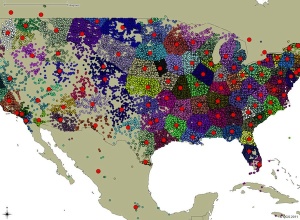
    Mostly because of the popularity of smartphones, location data is all the rage nowadays. You're almost always connected no matter where you are. Rich location data can help provide you a new sense of place, and at the same time, this sort of data can paint an interesting picture of what's going on in your country or around the world. Hence, Infochimps, the one-stop shop for data folk and developers, just announced their new Geo API.
    Continue Reading

  • Why one death is more moving than a million

    August 31, 2011 to Statistics  •  Nathan Yau  •  Share on Twitter

    We read the story about the suffering of an individual, and we're moved. We read in the paper that millions have died over the years due to hunger, and we're not quite as moved. This is due in part to our inability to imagine big numbers, but as David Ropeik for Psychology Today explains, the way we perceive risk also is a factor:

    Paul Slovic, one of the pioneers of research into the way we perceive risk, calls this greater concern for the one than the many "a fundamental deficiency in our humanity." As the world watches but, insufficiently moved, fails to act to prevent mass starvation or stop genocides in Congo or Kosovo or Cambodia or so many more, who would not agree with such a lament. But as heartless as it seems to care more about the one than the many, it makes perfect sense in terms of human psychology. You are a person, not a number. You don't see digits in the mirror, you see a face. And you don't see a crowd. You see an individual. So you and I relate more powerfully to the reality of a single person than to the numbing faceless nameless lifeless abstraction of numbers. "Statistics," as Slovic put it in a paper titled "Psychic Numbing and Genocide", "are human beings with the tears dried off." This tendency to relate more emotionally to the reality of a single person than to two or more people, or to the abstraction of statistics, is especially powerful when it comes to the way we perceive risk and danger, because what might happen to a single real person, might happen to you. As the familiar adage puts it, "There but for the grace of God go I."

    [Psychology Today via @alexlundry]

  • Getting around Chicago in 30 minutes or less

    August 30, 2011 to Mapping  •  Nathan Yau  •  Share on Twitter

    Get there inThirty

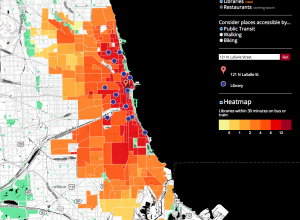
    When you're deciding on a place to live in a new place, it's always good to know what's in the area. After all, a house close to conveniences and things to do is usually more desirable than a house that is out of the way. InThirty, by Brian Lange of Datascope Analytics, provides some insight, starting with Chicago. Enter an address and see what libraries and parks (restaurants to come) are within 30 minutes of walking, biking, or public transit.

    It's stil fairly basic in what it does. You just get markers on the map for places that are within 30 minutes. The heat map on the layer underneath only changes as you change mode of transportation or between libraries and parks. Colors relative to your entered address could be more useful.

    Still though, like with Mapnificent, I like the idea of searching for things by travel time over distance. If a couple of places are 10 miles versus 20 miles away, I don't really care, if it takes the same amount of time to get there.

    [inThirty | Thanks, Bryan]

  • Price of weed

    August 29, 2011 to Mapping  •  Nathan Yau  •  Share on Twitter

    Price of weed

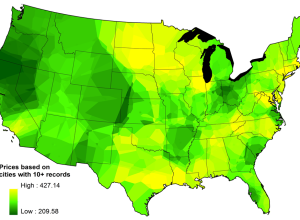
    I was raised to always find the best deal whenever I bought anything. Wait for the sales, and then stock up. Drive an extra mile for the cheaper supply of gas. So thank goodness floatingsheep has mapped the price of weed across the country. The more yellow, the more expensive the weed gets and the darker the green the lower the price.
    Continue Reading

  • Reporters make it easier to access Census data

    August 29, 2011 to Data Sources  •  Nathan Yau  •  Share on Twitter

    Census data can provide valuable information, but the datasets are not always the easiest to access. So you often end up spending a lot of time getting your data in order before you actually get to do anything with it. Investigative Reporters and Editors has released the next phase in their Census project to make Census 2010 more accessible via a simple interface. Easily download data in bulk as CSV or shapefiles or build it into your applications with the API.

    [census.ire.org via @bryanboyer]

  • Open thread: Is it OK to confuse if that’s the message?

    August 26, 2011 to Discussion  •  Nathan Yau  •  Share on Twitter

    Original mobile patent graphic

    Earlier this week we saw two versions of mobile patent lawsuits. The original was tangled, whereas the interactive revision was less jumbled. Reader Josh commented that the original had an advantage over the clearer version in that it actually demonstrated the mess that is patent law. A simliar argument came up last year, too, with this confusing chart showing Obamacare.

    With the patent chart, there's clearly a way to make the data more readable. If you had a choice between the original and the remake, is it okay to choose the original if your point is that mobile patent lawsuits suck and are more confusing than they need to be?

  • Generic terms for streams mapped

    August 26, 2011 to Mapping  •  Nathan Yau  •  Share on Twitter

    Stream Names

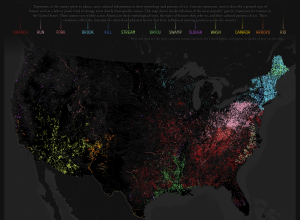
    The names of places can say a lot about a geographic area. Derek Watkins maps the most common term for a stream across the country. You've got branches and bayous in the south, brooks and streams in the northeast, and washes and arroyos in the southwest.
    Continue Reading

  • Steve Jobs patents

    August 25, 2011 to Infographics  •  Nathan Yau  •  Share on Twitter

    Steve Jobs Patents

    Steve Jobs stepped down as CEO of Apple yesterday, and one of the reasons we actually care is because he had a hand in so many major products that we use every day. Shan Carter and Alan McLean, for The New York Times, provide a breakdown of all 313 Apple patents that include Jobs in the group of inventors.

  • Who owns the beer

    August 25, 2011 to Network Visualization  •  Nathan Yau  •  Share on Twitter

    Who owns the beer

    When you walk the beer aisle at the grocery store, there are lots of different brands and types, so it can be easy to think that all of those beverages come from different companies. Maybe you felt like supporting the little guy by buying that beer that looks like it came from a smaller brewery; however, you just might be buying from one of the big guys. In a follow-up to the soda structure map, Phil Howard and Ginger Ogilvie map the structure of the top 13 beer companies.
    Continue Reading

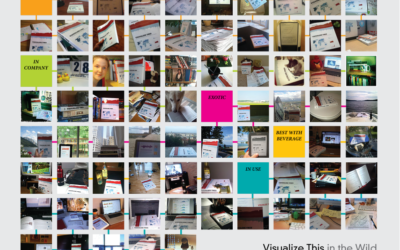
  • Visualize This spotted in the wild

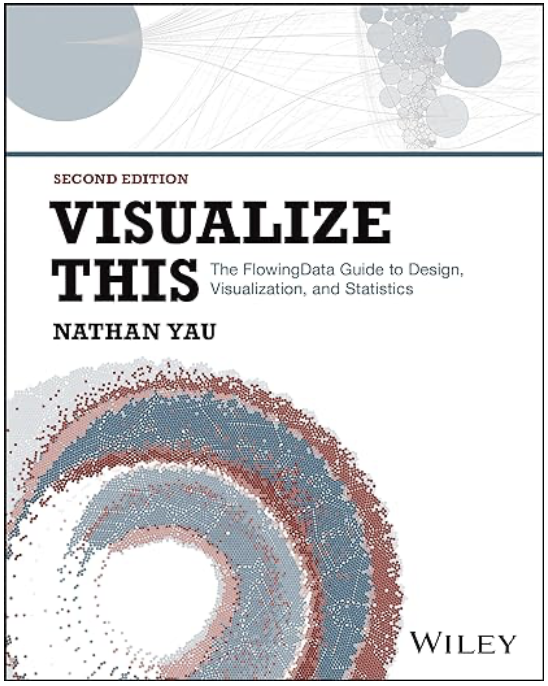
    Visualize This: Spotted in the wild

    It's been about a month since Visualize This came out, but it took a while for it to sink in....
  • Growth of newspapers across the United States

    August 24, 2011 to Mapping  •  Nathan Yau  •  Share on Twitter

    Growth of Newspapers

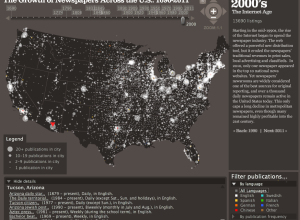
    The Rural West Initiative and the Bill Lane Center for the American West explore the growth of newspapers across the United States:

    With American newspapers under stress from changing economics, technology and consumer behavior, it's easy to forget how ubiquitous and important they are in society. For this data visualization, we have taken the directory of US newspaper titles compiled by the Library of Congress' Chronicling America project — nearly 140,000 publications in all — and plotted them over time and space.

    To see the distribution of papers over the years, simply click and drag the slider on the top. Context for each decade is displayed on the right. Each circle represents papers in a city, and the larger the circle the more papers.

    Catch the animated version below. They start in the east and make their way west.
    Continue Reading

  • BuzzData aims to make data more social

    August 23, 2011 to Online Applications  •  Nathan Yau  •  Share on Twitter

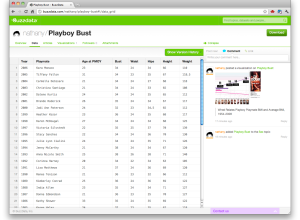
    BuzzData page

    In many ways, data wants to be social. It wants to get out there for people to see, interact with other datasets, and it wants people to talk about it. There aren't that many places for that to happen though. Newly launched BuzzData wants to fill that void. It's pitched as a "social network designed for data."
    Continue Reading

  • Statisticians as a tribe

    August 23, 2011 to Statistics  •  Nathan Yau  •  Share on Twitter

    Peter Curran for BBC Radio 4 puts the tribe of statisticians under the anthropological microscope. At the Royal Statistical Society Awards and Summer Reception, Curran interviews a number of statisticians on what they do and what statistics is really about. I mainly post this though for the part where he whispers about what he is seeing as if he were in a jungle studying a tribe of monkeys. Cracked me up.

    What's statistics to you?

    [BBC via @TimHarford]

  • Strata data conference: Last day for early bird registration + 20% off

    August 22, 2011 to News  •  Nathan Yau  •  Share on Twitter

    Following the success of the Strata conference earlier this year here on the west coast, O'Reilly is hosting another event from September 19 to 23. This time it's in New York.

    If you're planning on going, I suggest you register now and save a few hundred dollars. Tomorrow is the last day for early bird registration. Plus, FlowingData readers can use the discount code FLOW at checkout for an additional 20% off (and support FlowingData in the process).

    This time around there's the two-day conference on the 22nd and 23rd just like before, but there's also Strata Jumpstart on the 19th, which is "a crash course for managers, strategists, and entrepreneurs on how to manage the data deluge that's transforming traditional business practices across the board--in finance, marketing, sales, legal, privacy/security, operations, and HR." On the 20th and 21st, there's an invite-only summit.

    So what you could do is go to Jumpstart, hang out in the amazing city of New York for a couple of days, and then round out the week with some interesting data talks and meetups.

    If it's anything like the west coast conference — and I'm sure it will be — it'll be worth the time. When I went in February, I thought it'd be really business-y, but it turned out being an all-around fun event.

    Register here, and be sure to use FLOW to get the extra 20% discount.

  • Mobile patent lawsuits

    August 22, 2011 to Network Visualization  •  Nathan Yau  •  Share on Twitter

    Moblie patent suits

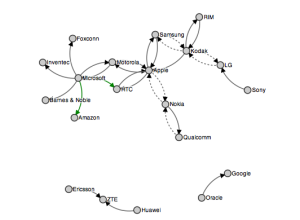
    Mike Bostock visualizes mobile patent lawsuits, improving on a graphic from Thomson Reuters that wasn't so good. Dashed lines are resolved suits and green ones are licenses to the company.
    Continue Reading

  • Bikes of San Francisco

    August 19, 2011 to Miscellaneous  •  Nathan Yau  •  Share on Twitter

    Bike of San Francisco

    Tor classifies areas in San Francisco by bicycle. I'd say that's about right.

    Also available in print.

    [Bikes of San Francisco via Laughing Squid]

  • Statistics for gambling

    August 18, 2011 to Statistics  •  Nathan Yau  •  Share on Twitter

    Statistics isn't just for finding out how our world works and how companies can improve their business. No. It's also for useful stuff, like, you know, gambling. Great interview with Edward Thorp [pdf], who's best known for bringing card counting in blackjack to the masses.

    I received my PhD in mathematics and then went out into the university world to teach. As it happened, I'd always had an interest in applications from all of my science play in my high school years. One idea I'd had during those days was the physical predicting of roulette. That idea had stuck with me, so as I was getting my PhD, I was working on that problem, just on the side for fun. That gave me an outlook toward gambling games that later paid off in the market. Although conventional wisdom held that you couldn't beat these games, the outlook was that that wisdom was not necessarily true and, in fact, was probably wrong. Gambling games, which were perceived to be efficient — in the financial-world sense of the word — might not be. In fact, I was convinced that wasn't the case in roulette. So I came to this orientation that the conventional wisdom wasn't right. That led me not only to build a wearable computer for roulette in conjunction with Claude Shannon of the Massachusetts Institute of Technology, but also to investigate card-counting in blackjack. I happened to see an article on blackjack strategy published in a statistical journal that was fairly close to even. After I used it just for fun, I came back and figured out a way to construct a winning strategy for the game.

    [Edward Thorpe via @pkedrosky]

  • Google Map Maker edits in real-time

    August 16, 2011 to Mapping  •  Nathan Yau  •  Share on Twitter

    Google Map Maker edits

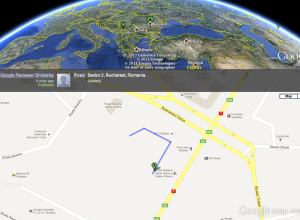
    Google Map Maker is a simple tool that lets you draw your own map and share that map with others. The Pulse view lets you see how people are making use of that tool in real-time. On top is the Google Earth view. On the bottom is a zoomed in view of the actual edit. Just press play, and see how people around the world are using Map Maker.

    It's a simple map that is of the same likeness as the Zappos sales map and the even older Twittervision, but somehow it's still fun to peek in to see what people are doing.

    [Google Map Maker via @johnmaeda]

  • The Sexperience 1000 shows a (statistical) view of what goes on in the bedroom

    August 16, 2011 to Infographics  •  Nathan Yau  •  Share on Twitter

    Age and virginity

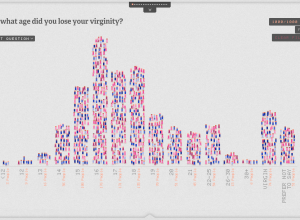
    The bedroom is a private place, and what goes on in the bedroom usually stays in the bedroom. However, the Sexperience 1000 (by Mint Digital and Lingobee), using data from the "Great Britain Sex Survey," provides a statistical picture of what people do or have done.
    Continue Reading

  • Statistical Graphics and Information Visualization

    August 15, 2011 to Visualization  •  Nathan Yau  •  Share on Twitter

    Spiral graph

    The two differ in who uses them, how they are used, and who consumes them. They have the same goal. It's to better understand data. You'd think that common bond would draw statisticians and information visualization researchers together for ample collaboration, but that isn't the case. You see, each group doesn't quite understand what the other is doing, and that's where intermingling gets tricky.
    Continue Reading

Copyright © 2007-2012 by FlowingData. Hosted by Media Temple.